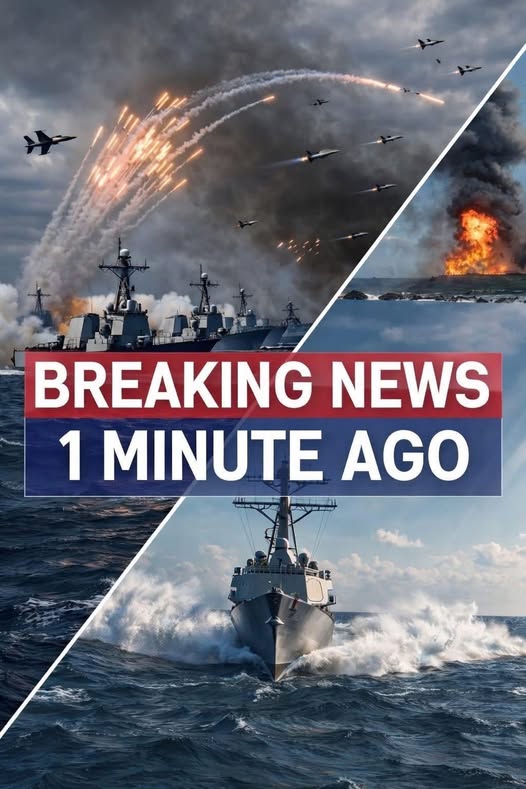
In recent years, the conflict in the Middle East has produced many dramatic headlines circulating online—some accurate, others exaggerated or misleading. One example is the claim that “Houthis fired 36 missiles at one U.S. destroyer — 22 minutes later, 14 bases were wiped out.” Headlines like this spread quickly on social media because they combine urgency, military action, and dramatic retaliation into a single story. However, understanding what actually happens in modern military confrontations requires a closer look at how such events typically unfold.
The group often mentioned in these reports is Houthi Movement, also known as Ansar Allah, a political and armed group that controls large portions of Yemen. Since the start of the Yemeni civil war in 2014, the Houthis have been involved in a long and complex conflict with a coalition led by Saudi Arabia, while also clashing indirectly with Western forces operating in the region.
Because of Yemen’s location near the Red Sea and the Gulf of Aden, the conflict sometimes spills into international waters. These waterways are critical global shipping routes connecting Europe, Asia, and the Middle East. As a result, naval vessels from multiple countries patrol the region to protect commercial ships and maintain maritime security.
One of the warships commonly deployed to protect shipping lanes is a U.S. Navy destroyer. Destroyers such as the Arleigh Burke-class destroyer are among the most advanced warships in the world. They are equipped with sophisticated radar systems, missile defense technology, and powerful weapons designed to defend against aircraft, missiles, and enemy ships.
These ships use a highly advanced combat system known as Aegis Combat System, which integrates radar tracking, missile interception, and automated defense capabilities. This technology allows the ship to detect incoming threats from long distances and respond quickly if missiles or drones are launched toward it.
When reports claim that dozens of missiles were fired at a single ship, it is important to understand how missile defense works in real situations. Naval defense systems typically rely on layered protection. This means multiple technologies work together: long-range radar detects threats, interceptor missiles attempt to destroy them mid-air, and close-range defense systems act as a final shield if anything gets through.
In many cases, incoming missiles can be intercepted before they ever reach a ship. This is one reason modern naval forces invest heavily in defensive technology. Even when multiple projectiles are launched at once, ships like U.S. destroyers are designed to handle complex attack scenarios.
However, dramatic claims about immediate massive retaliation—such as wiping out dozens of bases within minutes—often oversimplify how military responses actually occur. Military operations are typically planned carefully and executed according to strict command structures. Decisions about strikes usually involve intelligence analysis, coordination between multiple branches of the armed forces, and authorization from senior leadership.
In real conflicts, responses to attacks can take many forms. Sometimes forces intercept incoming threats without launching a counterattack. Other times, limited strikes may target specific launch sites or weapons facilities. In larger conflicts, military responses may involve airpower, naval forces, and allied support over a longer period of time.
The Middle East region has seen many examples of escalating tensions involving missile attacks, drone strikes, and naval encounters. Armed groups, regional powers, and international forces all operate within relatively close proximity, which increases the risk of misunderstandings or confrontations.
For example, the waters near Yemen have been the scene of several incidents involving commercial ships and military vessels. Armed groups have launched drones or missiles toward ships they claim are linked to rival countries. In response, naval forces sometimes intercept those threats or conduct operations to protect shipping routes.
The strategic importance of the Bab el‑Mandeb Strait, which connects the Red Sea to the Gulf of Aden, makes this area particularly sensitive. Roughly 10 percent of global trade passes through this narrow passage each year. Any disruption there can affect energy markets, shipping costs, and international trade.
Because of this, multiple countries maintain naval patrols in the region. These missions are designed not only to protect ships but also to deter attacks by demonstrating the presence of powerful military forces.
When viral headlines appear online, they often combine real geopolitical tensions with dramatic storytelling. Social media posts may exaggerate the scale or speed of events to attract attention. Phrases like “check the comment” or “see more” are frequently used to encourage users to click or share the post, helping it spread even further.
This does not necessarily mean every part of the story is false, but it does mean readers should approach such claims carefully. Verifying information through credible news organizations and official statements is the best way to understand what actually happened.
Another factor to consider is the fog of war. In fast-moving conflicts, early reports can be incomplete or inaccurate. Information may change as more evidence becomes available. Governments and military organizations sometimes release updates hours or even days after an incident once they have confirmed the facts.
The reality of modern warfare is complex and rarely fits into a single dramatic headline. Naval encounters, missile launches, and military responses involve sophisticated technology, detailed planning, and coordination among many different units.
While tensions in the region remain high and incidents do occur, the full story behind such events is often far more nuanced than viral posts suggest.
In the end, headlines like “36 missiles fired at a destroyer” capture attention because they highlight the risks and intensity of modern conflicts. But understanding the true scale and consequences of these events requires careful examination, reliable reporting, and a willingness to look beyond the most dramatic version of the story.