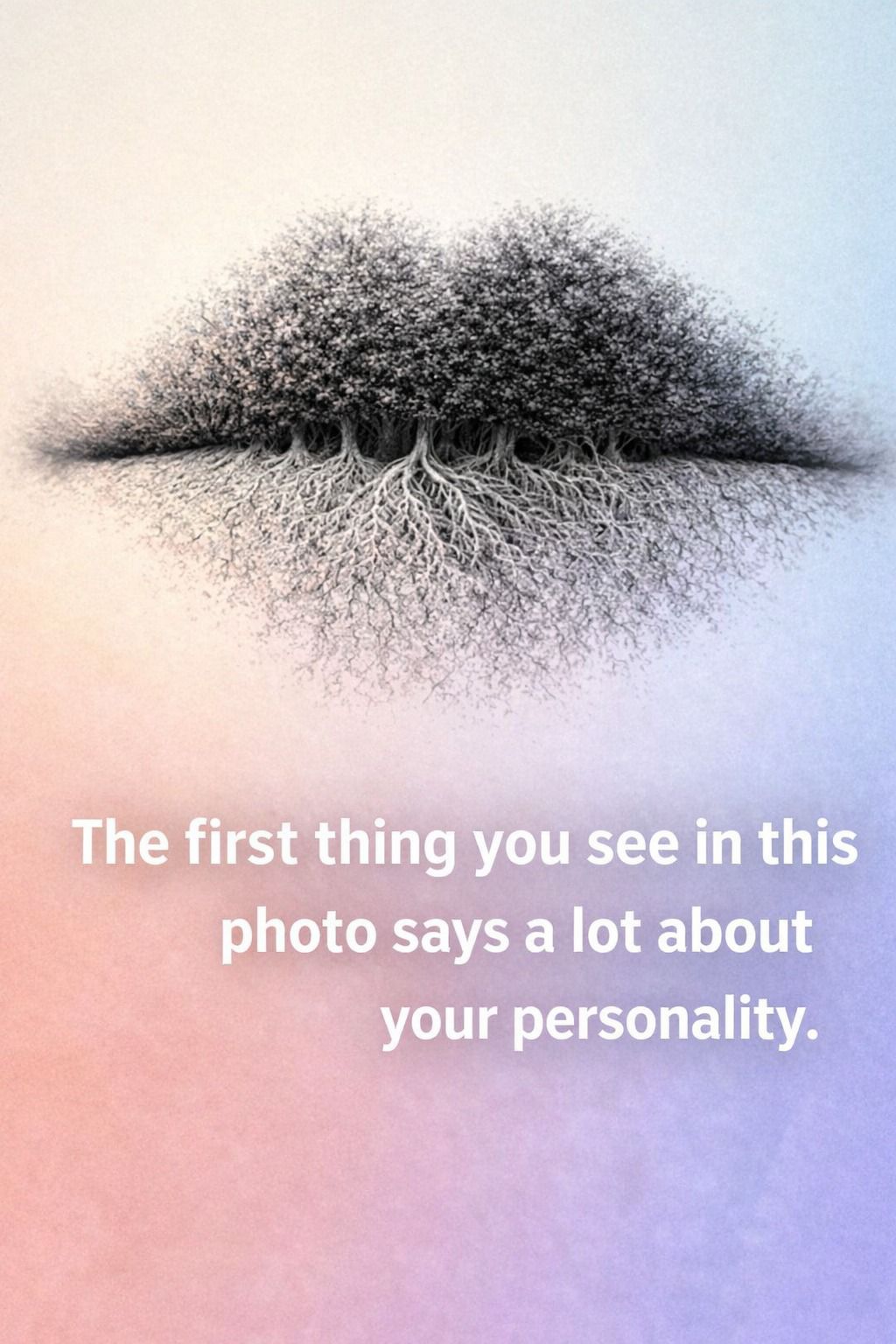
Images have long been used as fascinating tools to explore how the human mind works. When people look at the same picture but notice different things, psychologists often see it as a reminder that perception is deeply personal. A simple question like “What do you see in this image?” can open the door to discussions about personality, emotions, memories, and how individuals interpret the world around them.
These kinds of visual puzzles are popular because they invite people to pause and reflect on their instincts. The idea behind them is straightforward: the first thing your brain notices may reveal something about your psychological tendencies, your emotional focus, or how your mind processes information. While such interpretations should never be considered strict psychological diagnoses, they can still be fun and insightful ways to think about how perception works.
One reason these images are so interesting is that the human brain is constantly searching for patterns. When you look at a complex picture, your mind quickly organizes shapes, shadows, and colors into something meaningful. This ability helps us recognize faces, read body language, and navigate our environment. However, it also means that two people can interpret the same visual information in completely different ways.
Psychologists sometimes refer to this as “perceptual bias.” Your experiences, emotions, and even your mood at a particular moment can influence what you notice first. For example, someone who tends to focus on details might see smaller shapes or hidden objects in an image. Meanwhile, a person who looks at the big picture might notice a larger overall pattern before anything else.
Many viral optical illusion images rely on this principle. They often contain two or more possible interpretations hidden within the same design. The famous duck–rabbit illusion, for instance, can appear as either a duck or a rabbit depending on how your brain interprets the shapes. Once you see both possibilities, it becomes difficult to return to seeing only one.
When people are asked what they see first in these kinds of images, the responses can feel surprisingly revealing. If someone notices a face before anything else, they may be especially attuned to human emotions and social cues. If another person immediately spots an animal or object hidden within the design, they might have a strong attention to detail or a creative imagination.
Some visual personality tests claim that the first image you notice reveals deeper traits about your psychological nature. For instance, seeing a peaceful landscape might suggest that you value calmness and stability. Noticing movement or action within the picture might indicate an energetic or adventurous personality.
However, it is important to remember that most of these image-based personality tests are meant more for entertainment than for scientific evaluation. True psychological assessment involves structured research methods and careful analysis by trained professionals. A single image cannot fully define someone’s personality or emotional state.
That said, these visual challenges still provide an interesting window into how perception works. They encourage people to think about how quickly the brain processes information and how differently individuals can interpret the same stimulus.
Another fascinating aspect of these images is how they highlight the relationship between perception and memory. When you look at an ambiguous picture, your brain searches your past experiences for clues about what the shapes might represent. If a particular pattern reminds you of something familiar, you are more likely to interpret it that way.
For example, someone who grew up near nature might easily recognize shapes resembling animals or landscapes. A person who spends more time in urban environments might notice buildings, faces, or abstract patterns instead. These subtle influences shape the way each individual sees the world.
Color and contrast also play a role in perception. Bright colors tend to capture attention first, while darker areas may fade into the background until the brain examines them more carefully. Artists and designers often use this knowledge to guide viewers’ attention through a composition.
Psychologists who study perception are especially interested in how quickly these interpretations happen. In many cases, the brain forms an initial impression in just a fraction of a second. This rapid processing helps humans respond quickly to their surroundings, which historically played a role in survival.
Yet the same rapid decision-making can also lead to assumptions or misinterpretations. That is why optical illusions are so powerful—they expose the shortcuts the brain takes when trying to make sense of visual information.
Images that reveal different shapes depending on how you look at them also teach an important lesson about perspective. When someone else sees something different in the same picture, it reminds us that perception is not always objective. Each person brings their own viewpoint, experiences, and expectations into the process.
In everyday life, this concept extends beyond visual images. People often interpret situations, conversations, and events differently because their perspectives are shaped by unique backgrounds and experiences. Understanding that perception varies from person to person can encourage empathy and open-mindedness.
Another reason these visual tests remain popular online is that they create a sense of curiosity and participation. People enjoy comparing their answers with friends or family members to see whether others noticed the same thing first. This social element turns a simple image into a shared experience.
While the interpretations offered in these tests should be taken lightly, they still spark interesting conversations about personality. Some people feel that their results match their self-perception, while others find them amusing or surprising. Either way, the exercise invites people to reflect on how they think and perceive the world.
Ultimately, what you see in an image says as much about the human brain as it does about personality. The mind is constantly filtering enormous amounts of information, selecting certain details while ignoring others. This process allows us to navigate complex environments efficiently, but it also means that perception is rarely identical from one person to another.
So when someone asks, “What do you see in the image?” the question is not just about identifying shapes or objects. It is an invitation to explore how your mind interprets patterns, responds to visual clues, and constructs meaning from the world around you.
In that sense, the answer may not define your psychological nature completely—but it does offer a fascinating glimpse into the remarkable ways the human mind works.