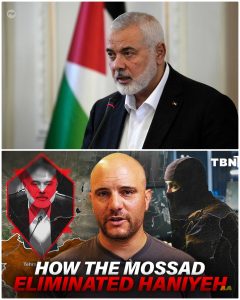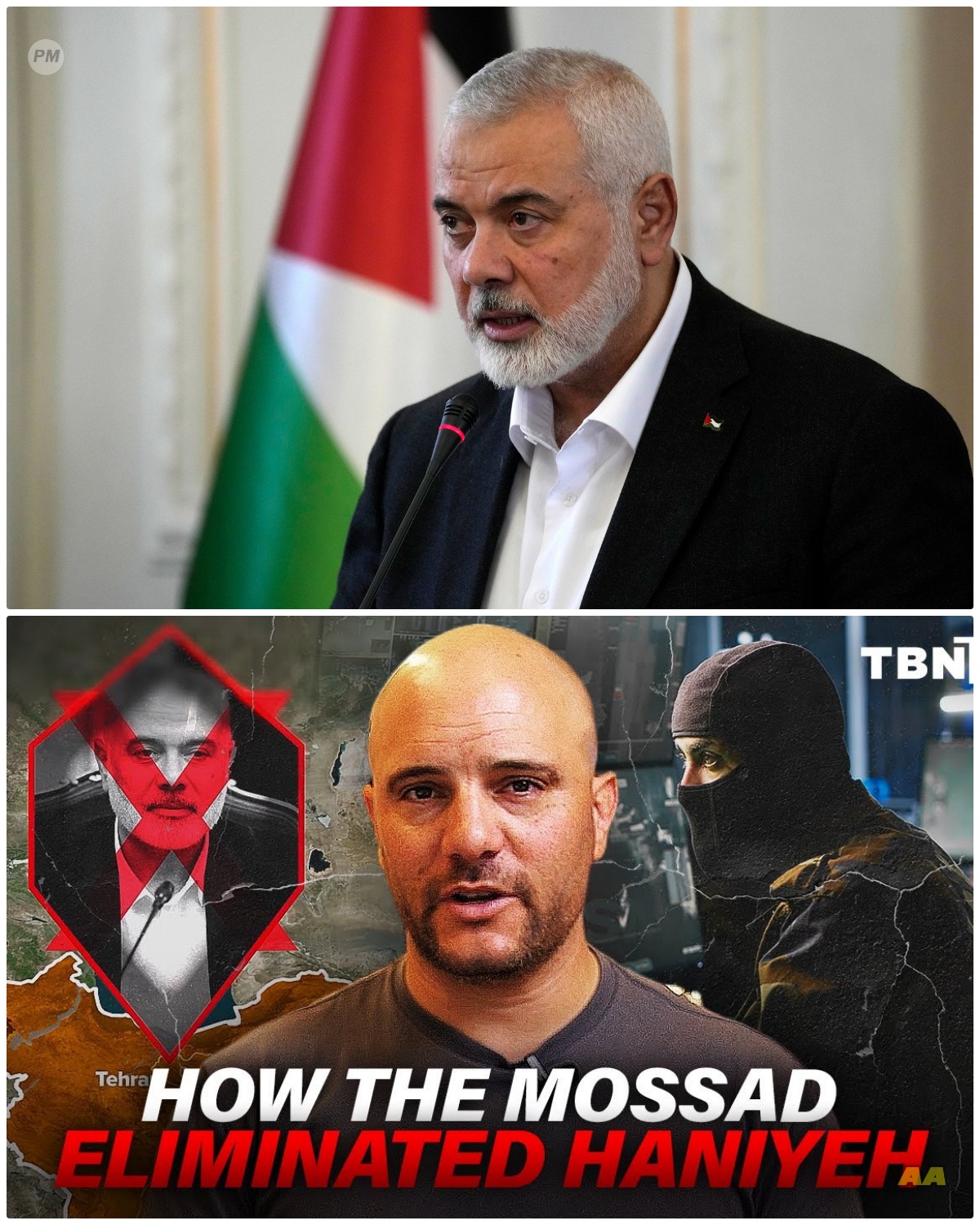
“Mossad’s Most Dangerous Mission?” — What We Actually Know About the Killing of Ismail Haniyeh
Dramatic headlines often describe intelligence operations in cinematic terms—“silent wars,” “perfect assassinations,” and “invisible enemies.” But when it comes to the killing of Hamas leader Ismail Haniyeh in 2024, the reality is more complex, less certain, and still surrounded by competing claims, denials, and unanswered questions.
This is the story as it is understood based on credible reporting—not speculation.
The Night That Shocked the Region
On July 31, 2024, Haniyeh was in Tehran, attending the inauguration of Iran’s newly elected president. He was staying in a highly secure guesthouse operated by Iran’s powerful military organization, the Islamic Revolutionary Guard Corps.
Then, suddenly, everything changed.
An explosion tore through the building where he was staying. Within hours, Iranian officials confirmed that Haniyeh had been killed along with a bodyguard.
The shock wasn’t just about the death itself—it was where and how it happened. Tehran is considered one of the most heavily guarded cities in the region, especially when hosting high-profile figures. The breach raised immediate questions about Iran’s internal security.
Who Was Responsible?
Almost immediately, both Hamas and Iranian officials pointed the finger at Israel.
Israel, however, followed its long-standing policy: it did not officially confirm or deny involvement.
This silence only deepened speculation.
Israel had previously vowed to target Hamas leadership following the October 7 attacks, which killed around 1,200 people and led to a major regional conflict.
Given that context, many analysts viewed Israel as the most likely actor—but “likely” is not the same as “confirmed.”
How Was the Attack Carried Out?
This is where the story becomes especially murky.
Different reports offer conflicting versions of what actually happened:
-
Explosive Device Theory:
Some investigations suggest a bomb had been secretly planted inside the guesthouse weeks—or even months—before Haniyeh arrived, then detonated remotely once his presence was confirmed. -
Inside Job Hypothesis:
Other reports claim operatives may have recruited insiders within Iran’s own security forces to place the device, representing a major intelligence breach. -
Projectile or Missile Claim:
Iranian authorities, at least initially, said the explosion may have been caused by a short-range projectile fired from outside the building.
Each version tells a very different story:
-
A planted bomb suggests deep infiltration.
-
A projectile suggests an external strike.
-
Insider involvement suggests compromised security at the highest level.
To this day, there is no universally confirmed account.
Why Tehran?
If the goal was to send a message, the location mattered.
Carrying out such an operation in Tehran—rather than Gaza or elsewhere—would signal extraordinary intelligence reach. It would suggest the ability to operate not just across borders, but inside one of the region’s most secure environments.
For Iran, the implications were serious:
-
A potential intelligence failure
-
Questions about internal loyalty
-
Pressure to respond
Reports indicated investigations, interrogations, and even arrests of personnel connected to the facility after the incident.
The Shadow War Context
The killing did not happen in isolation.
For years, Israel and Iran have been engaged in what many analysts describe as a “shadow war”—a conflict fought through covert operations, cyberattacks, assassinations, and proxy groups rather than direct large-scale battles.
In that context, Haniyeh’s death fits into a broader pattern:
-
Targeting leadership figures
-
Disrupting command structures
-
Sending strategic signals without open war
But it also raised the stakes.
Because Haniyeh was not just any figure—he was a top political leader of Hamas, a group closely linked to Iran.
Immediate Fallout
The reaction was swift and intense.
Hamas called the killing a “cowardly act” and vowed retaliation.
Iran also warned of consequences, framing the incident as both an attack on an ally and a violation of its sovereignty.
The region braced for escalation.
At the same time, global leaders worried the incident could widen the conflict, potentially drawing in more actors and destabilizing an already volatile situation.
Fact vs. Narrative
The headline you provided—“Mossad’s Most Dangerous Mission”—reflects a popular narrative, but it’s important to separate verified facts from dramatic framing:
✔ Confirmed:
-
Haniyeh was killed in Tehran in July 2024
-
Iran and Hamas blamed Israel
-
Israel did not confirm involvement
-
The method of attack remains disputed
⚠️ Unconfirmed / Speculative:
-
Direct proof Mossad carried out the operation
-
Exact method (bomb vs missile vs insider plot)
-
Detailed “mission-style” accounts
In intelligence matters, the truth is often deliberately obscured—and sometimes never fully revealed.
The Bigger Picture
Beyond the intrigue and speculation, the event highlights something deeper:
-
The reach of modern intelligence operations
-
The vulnerability of even highly secure systems
-
The fragile balance of power in the Middle East
It also underscores how quickly a single घटना can reshape regional dynamics.
Final Thoughts
The killing of Ismail Haniyeh remains one of the most high-profile and mysterious incidents in recent Middle Eastern history. While many believe it was a calculated intelligence operation, the full truth—who planned it, how it was executed, and what comes next—remains partially hidden behind layers of secrecy.
What is clear, however, is this:
This was not just an isolated act. It was part of a much larger, ongoing conflict—one that continues to unfold both in the open and in the shadows.