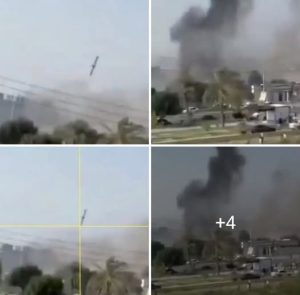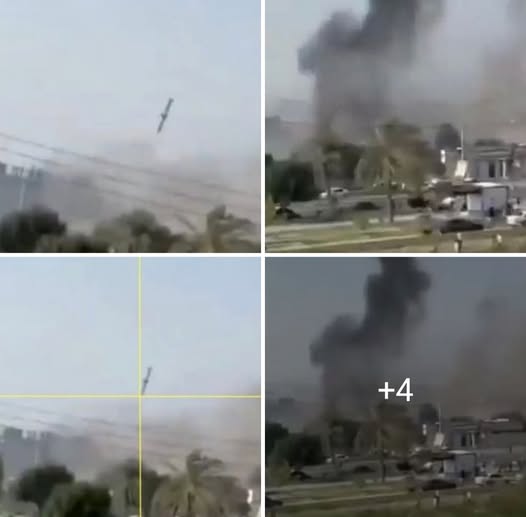
The claim that “the missile that fell on a girls’ school in Iran was a Raduga Kh-55 launched by…” has become one of the most controversial and heavily debated issues of the 2026 Iran war. What actually happened is far more complex than viral posts or dramatic headlines suggest. Below is a detailed, fact-checked explanation of the incident, the missile involved, and the competing claims about who launched it.
The Tragedy That Shocked the World
On February 28, 2026, a devastating missile strike destroyed the Shajareh Tayyebeh girls’ elementary school in Minab, southern Iran. The attack occurred within hours of the opening phase of the wider regional conflict involving Iran, the United States, and Israel.
According to verified reporting:
- At least 170–175 people were killed, most of them schoolchildren.
- Dozens more were injured.
- The strike happened between 10:23 and 10:45 a.m. local time, when students and staff were still evacuating.
Images of collapsed classrooms, scattered backpacks, and rescue workers digging through rubble quickly spread worldwide, turning the incident into one of the deadliest civilian events of the war.
But almost immediately, disagreement began over one critical question:
👉 Who fired the missile?
What Is the Raduga Kh-55 Missile?
The Raduga Kh-55 (NATO designation AS-15 “Kent”) is a long-range Soviet-designed air-launched cruise missile developed during the Cold War.
Key characteristics:
- Designed by Soviet bureau MKB Raduga
- Air-launched from strategic bombers
- Range up to 2,500–3,000 km
- Flies low and subsonic to avoid radar detection
- Originally built to carry nuclear warheads, though conventional versions exist
The missile is normally launched from aircraft such as:
- Tu-95 strategic bomber
- Tu-160 strategic bomber
Unlike ballistic missiles, cruise missiles like the Kh-55 fly closer to the ground and can maneuver along terrain routes before striking a target.
Importantly, several countries — including Russia, China, and Iran — have possessed or developed systems derived from Kh-55 technology.
The Competing Claims
1. Iran’s Initial Position
Iranian officials quickly blamed U.S. and Israeli forces, claiming the school was struck during early coalition airstrikes.
The argument was:
- Western aircraft were operating nearby.
- The strike coincided with the opening wave of attacks.
- Civilian casualties were presented as evidence of foreign targeting errors.
This narrative spread rapidly across regional media and social networks.
2. U.S. and Israeli Denials
Both Washington and Jerusalem denied responsibility.
Officials argued:
- Their strikes targeted military infrastructure.
- No planned target list included the school.
- Early radar and operational logs did not match a coalition launch profile.
Later reporting indicated that a U.S. military investigation began examining whether American forces could have been involved indirectly or through mistaken targeting.
The investigation has not publicly issued final conclusions.
3. The Kh-55 Theory
Soon after videos of the impact circulated online, analysts began studying the missile’s shape and flight behavior.
Some independent analysts suggested:
- Wing placement and body proportions resembled a Kh-55-type cruise missile.
- The descent angle differed from U.S. Tomahawk cruise missile characteristics.
These claims fueled the theory that the weapon may have been:
- An Iranian missile malfunction, or
- A domestically modified Kh-55 derivative accidentally striking the school.
However, much of this analysis originated from social media discussions and has not been officially confirmed by international investigators.
Why Attribution Is So Difficult
Missile attribution in modern warfare is extremely complex. Several factors complicate the investigation:
1. Missile Proliferation
Kh-55 technology spread widely after the Soviet Union collapsed. Ukraine transferred some units abroad, and derivatives influenced multiple missile programs worldwide.
Meaning:
👉 Identifying a Kh-55 design does not automatically identify the launcher.
2. Modified Variants
Iran has developed indigenous cruise missiles believed to be influenced by Kh-55 engineering concepts.
A missile may resemble a Kh-55 externally while being:
- Locally produced,
- Modified,
- Or assembled using mixed technologies.
3. Fog of War
The strike happened on the first day of active conflict, when:
- Air defenses were firing,
- Multiple countries launched operations simultaneously,
- Radar tracking networks were overwhelmed.
Misidentification becomes common under such conditions.
What Investigations Suggest So Far
Independent reporting has raised troubling questions about the attack.
An investigation cited by international media suggested the school may have been deliberately struck, though responsibility remains disputed.
Meanwhile, international bodies including the United Nations have called for:
- Satellite data review
- Weapon fragment analysis
- Flight-path reconstruction
- Access to military radar recordings
As of now:
✅ The exact launcher has not been publicly confirmed.
✅ No government has accepted responsibility.
✅ Investigations remain ongoing.
Information Warfare and Propaganda
The Minab school tragedy rapidly became a central battleground in the information war surrounding the conflict.
Each side used the incident differently:
- Iran framed it as proof of foreign aggression.
- Western officials suggested Iranian military proximity may have contributed.
- Online communities promoted competing technical analyses claiming certainty.
Modern wars are fought not only with missiles but with narratives — and civilian tragedies often become powerful symbols.
The Human Cost
Beyond missile models and political blame lies the deeper reality:
- Hundreds of families lost children.
- Teachers died trying to evacuate students.
- Survivors described chaos, dust, and silence after the explosion.
Regardless of who launched the weapon, the strike demonstrated how quickly civilians become victims when high-precision weapons are used in densely populated areas.
Bottom Line
✔ A girls’ school in Minab, Iran, was destroyed by a missile strike in February 2026.
✔ Some analysts believe the weapon resembled a Raduga Kh-55–type cruise missile.
✔ Multiple competing claims exist about who launched it.
✔ No final, internationally verified attribution has been released.
In short:
👉 The statement that “a Raduga Kh-55 launched by [specific actor] destroyed the school” remains unproven as of current verified reporting.
If you want, I can also explain next:
- Why Kh-55 missiles are so controversial in modern conflicts
- The most likely launch scenarios experts are debating
- Or a timeline of the Iran war leading up to the strike.