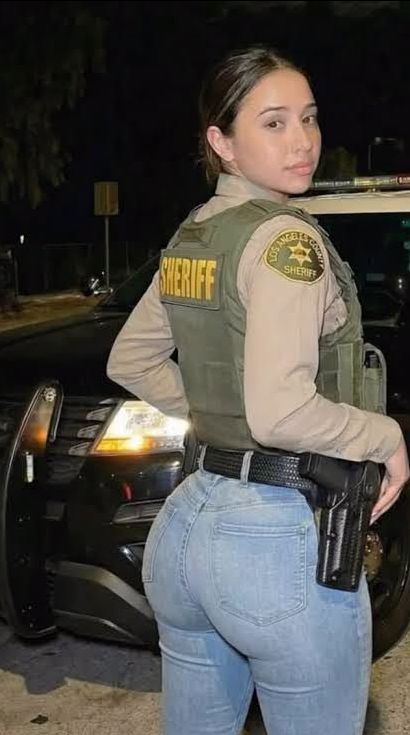
The patrol car rolled slowly into the station parking lot just as the sky began turning shades of orange and violet. Officer Maya Reynolds turned off the engine and sat in silence for a moment, letting the hum of the day finally fade.
Her shift had lasted twelve long hours.
Calls about noise complaints, a minor traffic accident, a missing dog that turned out to be sleeping under a neighbor’s porch—nothing dramatic by police standards, yet emotionally exhausting all the same. Being a young officer meant constantly proving herself, balancing professionalism with compassion, and carrying stories she couldn’t always share.
Maya removed her cap and ran a hand through her hair, exhaling deeply.
Every shift ended the same way: paperwork, locker room conversations, tired smiles exchanged with colleagues who understood without words. But tonight felt different.
After changing out of her uniform jacket, she walked outside the station, phone in hand. The cool evening air brushed against her face. Streetlights flickered on one by one, and distant traffic created a soft, steady rhythm.
She opened her camera.
For a few seconds, she hesitated.
Then she pressed record.
“Hey everyone,” she began quietly, her voice softer than the confident tone she used on duty. “I just finished another shift.”
The video wasn’t meant to go viral. It wasn’t rehearsed or polished. It was simply a moment of honesty.
Maya had started recording short reflections after work weeks earlier, mostly as a personal outlet. Policing, she had learned, involved more emotional weight than anyone warned her about at the academy. Talking helped her process the day.
“I think people imagine police work as constant action,” she said, leaning against her car. “But most of it is listening. Listening to people who are scared, angry, lonely, or just having the worst day of their lives.”
She paused, searching for words.
“Today I helped an elderly man who called because he thought someone was trying to break into his home,” she continued. “Turns out he was just afraid of being alone. We ended up talking about his late wife for almost an hour.”
Her expression softened.
“That’s the part nobody sees.”
She stopped recording, watched the clip once, and almost deleted it. Sharing vulnerability felt risky in a profession where strength was expected at all times.
But instead, she posted it.
The video slowly gathered views overnight.
At first, only friends and a few coworkers reacted. Comments appeared:
“Proud of you.”
“People don’t realize how much officers do beyond emergencies.”
By morning, however, something unexpected happened.
The video spread far beyond her circle.
Thousands of people shared it, connecting with the sincerity in her voice. Viewers said they had never heard an officer speak so openly about the emotional side of the job.
By lunchtime, the video had reached hundreds of thousands of views.
Maya discovered this during her next shift briefing when a fellow officer nudged her.
“Uh… you’re kind of everywhere online right now.”
She blinked. “What?”
He turned his phone toward her.
There she was—leaning against her patrol car, tired eyes reflecting streetlights, speaking honestly about humanity behind the badge.
Her heart raced.
She hadn’t intended attention. The video wasn’t activism or publicity. It was just… real.
Messages began flooding her inbox.
A nurse wrote that she felt the same emotional exhaustion after long hospital shifts. A teacher thanked her for reminding people that service jobs often involve unseen emotional labor. One teenager admitted the video changed how he viewed police officers entirely.
But one message stood out.
A woman wrote: “An officer helped my son during a crisis years ago. I never got to thank her properly. Your video reminded me that kindness matters.”
Maya reread that message several times.
For the first time since joining the force, she realized her small reflections might help bridge a gap between officers and the communities they served.
Still, not all responses were positive.
Some critics questioned her motives, accusing her of seeking attention. Others argued that social media and policing shouldn’t mix. The sudden spotlight brought pressure she hadn’t anticipated.
That night, she sat in her apartment staring at her phone, unsure whether to keep posting.
Her mother called.
“I saw your video,” her mom said gently. “You looked tired—but proud.”
“I didn’t expect this reaction,” Maya admitted. “I just wanted to talk about my day.”
“Well,” her mother replied, “maybe people needed to hear it.”
The next evening, after another shift, Maya stood again beside her patrol car.
She hesitated only briefly before pressing record.
“Hi again,” she said. “I didn’t think anyone would watch my last video. But since you did, I want to share something important.”
She spoke about stress, about officers supporting each other after difficult calls, about learning to show empathy even when exhausted.
“I think we all forget,” she said, “that every uniform—police, medical, firefighter, teacher—belongs to a person trying their best.”
Her words felt natural.
Authentic.
And once again, viewers responded.
People weren’t drawn to dramatic stories or sensational moments. They were drawn to honesty. They saw a young officer navigating responsibility, vulnerability, and growth.
Weeks passed.
Maya’s videos became small windows into daily life behind the badge. She never shared confidential details or sensational stories—only reflections about patience, kindness, and the importance of human connection.
One evening, while responding to a routine call, a woman recognized her.
“You’re the officer from those videos,” she said with a smile. “You remind people that you care.”
The comment stayed with Maya long after the call ended.
She realized the recordings weren’t just helping her process work—they were helping others see policing differently.
Not as headlines or stereotypes.
But as people.
Months later, during a community event, a young girl approached shyly.
“My dad and I watch your videos,” she said. “I want to be a police officer someday.”
Maya knelt slightly to meet her eye level.
“Then remember,” she told the girl gently, “the most important part of the job isn’t authority—it’s compassion.”
As the child walked away smiling, Maya felt something shift inside her.
The long hours, emotional weight, and exhaustion suddenly felt meaningful in a new way.
That night, after finishing her shift, she recorded another message beneath the glow of the station lights.
“I started these videos because I needed a way to unwind,” she said. “But now I realize they’re about connection. We’re all just people trying to understand each other a little better.”
She ended the recording with a tired but genuine smile.
Somewhere beyond the camera lens, thousands of viewers would soon watch—not because of drama or controversy, but because authenticity had a quiet power of its own.
And as Officer Maya Reynolds placed her phone back into her pocket and headed home, she understood something simple yet profound:
Sometimes the strongest act isn’t enforcing the law.
Sometimes it’s showing the world the human heart behind the uniform.