I Was Shocked to Learn Why Some Window Grills Curve at the Bottom — Most People Don’t Know the Real Reason!
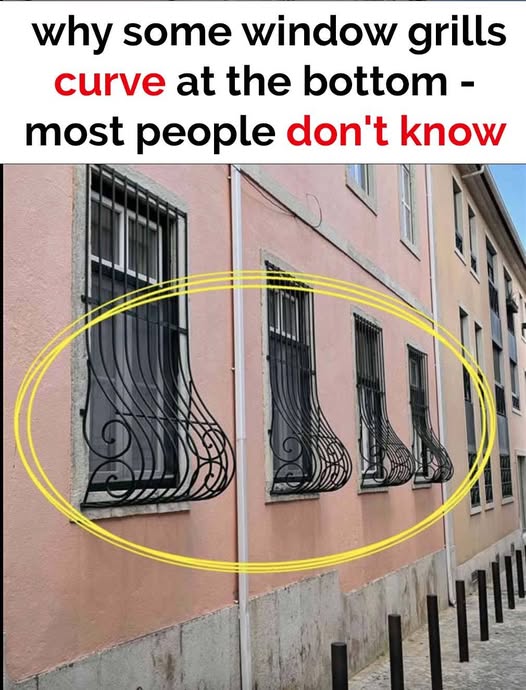
Have you ever walked past an older apartment building or house and noticed something unusual about the window grills? Instead of being perfectly straight, some of them bulge outward at the bottom, forming a gentle curve or rounded basket shape. Many people assume it’s simply decorative — an artistic flourish added by architects to make buildings look elegant.
But the truth behind these curved window grills is far more practical, fascinating, and deeply rooted in history than most people realize.
When I first discovered the real reason, it completely changed how I looked at urban architecture.
The First Impression: Decoration or Design?
At first glance, curved window grills appear ornamental. They break the rigid geometry of walls and windows, adding softness to otherwise plain facades. In historic neighborhoods especially, these curved iron structures seem like part of a stylistic tradition — similar to ornate balconies or wrought-iron railings.
Many homeowners even believe the curve exists purely for aesthetic balance.
But architecture rarely includes features without purpose. Builders, especially in older cities, prioritized function just as much as beauty. Every extra piece of iron cost money, labor, and time. If something was added, it usually solved a real problem.
The curved grill is no exception.
The Hidden Function: Mini Outdoor Space
The primary reason some window grills curve outward is surprisingly simple: they create usable space outside the window while maintaining security.
These curved designs are often called window baskets or potbelly grills. By extending outward, they allow residents to place objects outside the window without risking them falling.
Historically, this extra space served several purposes:
- Holding flower pots
- Storing small household items temporarily
- Allowing better airflow
- Creating room for window cleaning
- Supporting early air-conditioning units or fans
In dense urban environments where balconies were rare and apartments were small, even a few extra inches of outdoor space mattered enormously.
The Gardening Secret
One of the most common traditional uses was urban gardening.
Long before modern balconies became common, city residents wanted greenery in their homes. The curved grill allowed people to safely place flower pots outside the window while keeping them secured by iron bars.
Imagine narrow European streets or crowded city blocks decades ago. Residents living several floors above the ground still wanted plants, herbs, or flowers. Straight grills left no room for pots — but curved grills created a natural shelf.
This small innovation transformed windows into miniature gardens.
Even today, you’ll often see colorful flowers growing from these curved frames, proving the design still works perfectly.
Safety Without Sacrificing Light
Window grills were originally installed for security — to prevent break-ins while allowing windows to stay open for ventilation.
However, straight bars created a problem: they sat very close to the glass. This limited movement, blocked airflow, and made cleaning difficult.
The curved design solved multiple issues at once:
- Improved ventilation: Air circulates more freely around the window.
- More natural light: The outward curve reduces the boxed-in feeling.
- Emergency movement: Occupants can lean outward slightly without obstruction.
- Ease of maintenance: Cleaning windows from inside becomes much easier.
Architects essentially turned a security feature into a comfort upgrade.
A Clever Climate Solution
Before air conditioning became widespread, managing indoor temperature was crucial. Homes relied heavily on natural ventilation.
Curved window grills allowed residents to open windows wider without fear of objects falling or intruders entering. Some families even placed damp cloths or cooling containers in the curved space to help cool incoming air during hot weather.
In warmer climates, this design worked like a primitive cooling system.
It’s amazing to realize that something so simple helped people survive summers long before modern HVAC technology existed.
The Laundry Connection
Here’s another lesser-known historical reason: drying clothes.
In crowded cities where outdoor yards were unavailable, residents needed creative ways to dry laundry. The curved grill provided just enough projection to hang small garments safely outside.
Clothes could catch sunlight and fresh air without falling into the street below. This was especially useful in apartment buildings where shared rooftop access wasn’t always practical.
Even today, you may still spot towels or small clothing items draped over these curved structures in older neighborhoods around the world.
Protection for Children and Pets
Families with children quickly discovered another advantage.
The outward curve creates a small buffer zone between the window and the exterior world. Children could look outside more comfortably without pressing directly against the bars. Pets, especially cats, gained a safe perch to observe the street below.
This design improved safety while enhancing daily life — something modern architecture sometimes forgets to prioritize.
Architectural Psychology: Why the Curve Feels Better
There’s also a psychological aspect to curved window grills.
Humans naturally respond positively to curved shapes. Straight bars can feel restrictive or prison-like, while rounded forms appear welcoming and less threatening.
By curving outward, designers softened the visual impact of security bars. Residents felt protected without feeling confined.
It’s a subtle example of how architecture influences emotion without us realizing it.
Why You See Them Mostly on Older Buildings
You might wonder why curved window grills appear more often on older structures rather than modern apartments.
Several reasons explain this:
- Modern balconies replaced the need for extra window space.
- Central air conditioning reduced reliance on open windows.
- Contemporary building codes changed safety standards.
- Minimalist design trends favor clean, straight lines.
Yet despite changing trends, many architects still admire the practicality of the curved grill. Some modern homes are even reintroducing updated versions as decorative garden holders or window seats.
Cultural Variations Around the World
Interestingly, curved window grills exist across many cultures, each adapting the idea differently.
- In Mediterranean regions, they often support flower displays.
- In South Asian cities, they help with ventilation and storage.
- In Latin American neighborhoods, they serve as both decoration and security.
- In parts of Europe, they became iconic elements of historic architecture.
The shared concept shows how universal human needs — space, safety, and comfort — inspire similar solutions across continents.
A Small Detail With a Big Story
What makes the curved window grill so fascinating is how easily people overlook it. We pass by these structures daily without questioning their purpose.
Yet behind that simple curve lies a blend of engineering, social history, climate adaptation, and human creativity.
It’s proof that everyday architecture often carries hidden stories — solutions created by people who understood how to make limited spaces more livable.
Seeing Your City Differently
After learning the real reason, it becomes impossible not to notice them everywhere. Suddenly, buildings feel less anonymous. Each curved grill tells a quiet story about past residents growing flowers, cooling rooms, drying laundry, or simply enjoying fresh air from a small apartment window.
The next time you walk down a city street, look up.
That curved piece of iron isn’t just decoration. It’s a clever invention born from necessity — a reminder that even the smallest architectural details can reveal how people adapted, survived, and added beauty to everyday life.
And once you know the secret, you’ll never look at window grills the same way again.