Pilot’s 3-Word Message After Iran Shot Down F-15E Revealed
The moment lasted only seconds — but military officials say it may become one of the most unforgettable radio transmissions in modern aerial warfare.
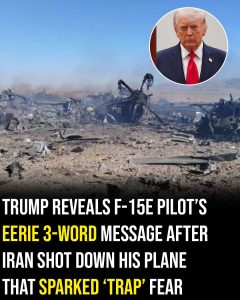
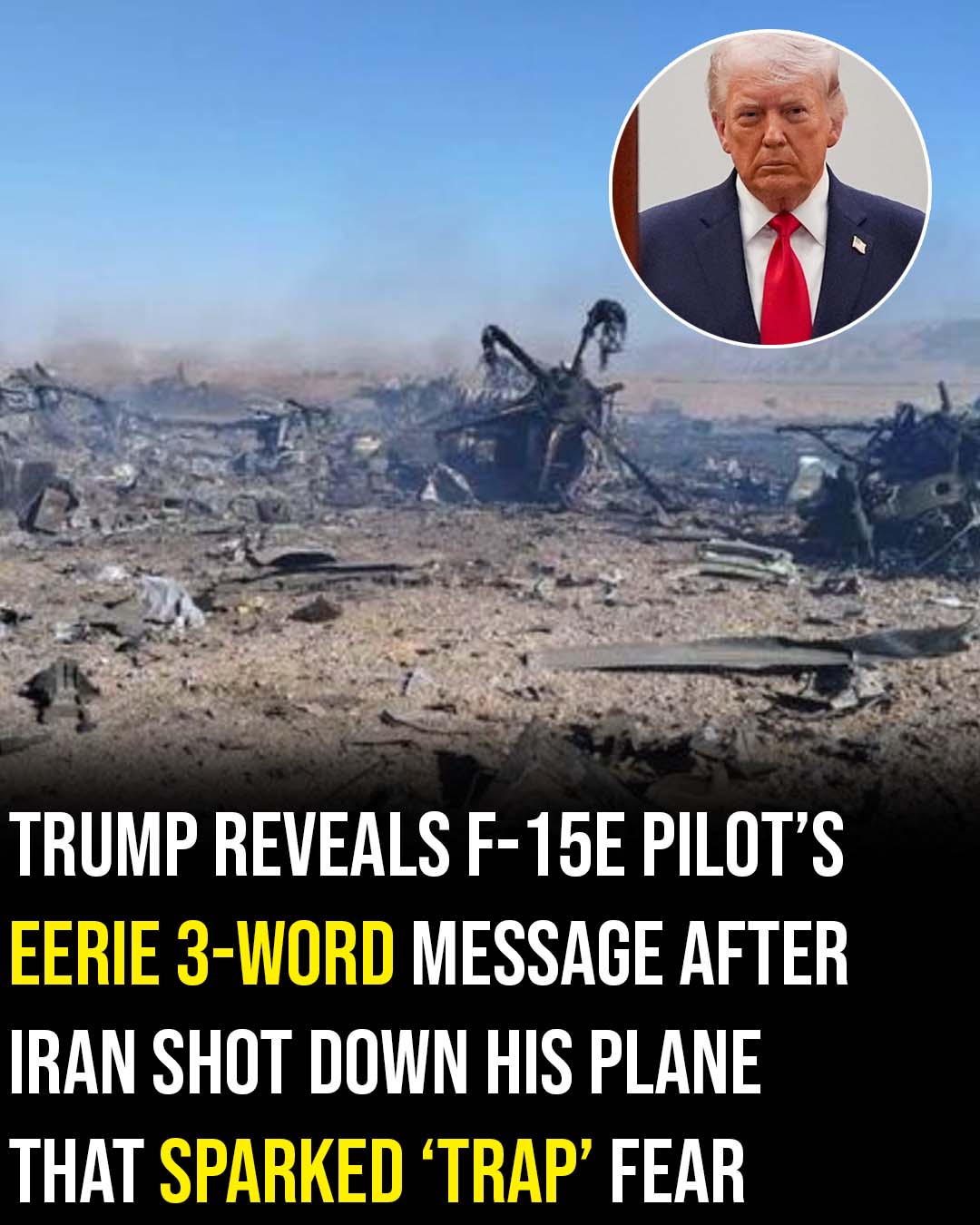
When a U.S. Air Force F-15E Strike Eagle disappeared from radar during a high-risk mission near Iranian territory, commanders listening over encrypted communications heard three chilling words from the aircraft’s pilot just before silence fell across the channel.
Those words, according to sources familiar with the rescue operation, were:
“Taking heavy fire.”
What followed was a dramatic chain of events involving missile warnings, emergency ejection procedures, a multinational rescue effort, and a tense geopolitical standoff that pushed tensions in the Middle East dangerously closer to open confrontation.
The Mission That Changed Overnight
The F-15E Strike Eagle — a two-seat fighter designed for deep-strike missions — had been operating as part of ongoing U.S. military operations connected to escalating regional conflict.
The aircraft was flying alongside other coalition assets tasked with monitoring airspace and supporting operations linked to growing tensions around the Strait of Hormuz.
Military analysts say the mission itself was routine on paper.
But intelligence suggested Iranian air defenses had recently been upgraded.
That changed everything.
As the jet crossed into a contested operational zone, radar operators detected unusual tracking signals — signs that surface-to-air missile systems had locked onto the aircraft.
Moments later, alarms sounded inside the cockpit.
Seconds Before Impact
Pilots train their entire careers for situations like this.
Warning tones filled the aircraft as defensive countermeasures automatically deployed — flares, electronic jamming signals, and evasive maneuvers meant to confuse incoming missiles.
Then came the radio call.
Witnesses monitoring command channels reported hearing the pilot calmly transmit:
“Taking heavy fire.”
The transmission cut out shortly afterward.
Military tracking systems showed the jet losing altitude rapidly before disappearing from radar entirely.
Iranian sources later claimed responsibility for shooting down an American aircraft, though officials on both sides initially withheld confirmation while search-and-rescue teams mobilized.
The Ejection
The F-15E carries two crew members: a pilot and a weapons systems officer.
According to defense officials, both crew members successfully ejected before the aircraft crashed.
Ejection seats fire pilots out of the aircraft with explosive force, deploying parachutes seconds later — often at low altitude, under extreme stress, and sometimes behind enemy lines.
This time, survival became only the beginning of the ordeal.
One airman was located and recovered relatively quickly.
The second pilot vanished.
And that triggered one of the most dangerous rescue missions in recent U.S. military history.
Operation: Bring Him Home
Within hours, American forces launched a combat search-and-rescue operation.
Specialized HH-60 Pave Hawk helicopters, supported by surveillance aircraft and fighter escorts, entered hostile territory searching for the missing aviator.
The mission was extraordinarily risky.
Reports indicate rescue helicopters came under hostile fire while attempting to locate the downed pilot, highlighting how dangerous the environment had become.
For more than a day, the injured airman reportedly evaded capture while hiding in mountainous terrain.
Military planners faced a grim reality:
Every minute increased the risk of capture by Iranian forces.
Every rescue attempt risked escalation into direct military confrontation.
The Rescue
After an intense search involving drones, intelligence surveillance, and ground coordination, U.S. special operations forces conducted a daring nighttime extraction.
According to officials, the missing service member was successfully rescued after surviving alone behind enemy lines.
President Donald Trump later confirmed that a service member missing after Iran downed the fighter jet had been recovered safely, ending a tense international standoff.
The rescue marked a rare modern example of a full-scale personnel recovery mission carried out under active threat conditions.
Military historians compared the operation to Cold War-era extractions — moments when a single pilot’s survival carried enormous symbolic weight.
Why the 3 Words Matter
Military experts say the pilot’s final transmission reveals something deeper than a combat update.
It reflects the culture of military aviation.
Fighter pilots are trained to remain calm, concise, and precise even in life-threatening situations.
Three words can communicate everything command needs:
- The aircraft is under attack
- Defensive measures are active
- Immediate support may be required
Those brief words triggered automatic escalation protocols across multiple command centers.
Within minutes, intelligence teams, rescue planners, and air-support units were coordinating across thousands of miles.
Rising Tensions
The shootdown immediately intensified already fragile relations between Washington and Tehran.
Iranian officials portrayed the event as proof of their defensive capabilities, while U.S. leaders framed it as an aggressive act threatening international stability.
Analysts warn incidents like this carry enormous escalation risk.
A downed aircraft is never just an isolated military loss — it becomes political, symbolic, and strategic all at once.
The survival of the pilot prevented what could have been an even more explosive crisis.
Had the airman been captured, negotiations, retaliation debates, and global diplomatic pressure would likely have followed within hours.
The Human Side of Air Combat
Behind the headlines lies a human story rarely seen by the public.
Fighter pilots operate at extreme speeds, often flying missions where danger can appear without warning.
The difference between survival and tragedy may come down to seconds — or a single decision made under unimaginable pressure.
Former pilots note that transmitting anything at all during a missile engagement requires discipline.
Many aircraft losses occur so quickly that no final message is ever sent.
That makes the now-famous three-word transmission even more powerful.
It was proof that, even at the worst moment imaginable, the pilot was still fighting to survive.
What Happens Next
Investigations are underway to determine exactly how the aircraft was targeted and whether new air defense systems were responsible.
Military planners are also reviewing tactics for operating in heavily defended airspace.
Meanwhile, the rescued aircrew members are reportedly undergoing medical evaluation and psychological debriefing — standard procedure after high-risk combat survival situations.
For the public, the story may fade into another headline.
But inside military circles, it will likely be studied for years.
Because sometimes history turns not on speeches or battles…
…but on three words spoken calmly over a fading radio signal.
“Taking heavy fire.”
And then — silence.