Note That If You Always Sleep on Your Right Side, You Should Have… See More
Most people never think twice about how they sleep.
After a long day, we simply lie down in whatever position feels comfortable and drift off without questioning whether posture during sleep affects our health. Yet sleep experts and medical researchers increasingly agree on one important point:
Your sleeping position matters more than you think.
One headline circulating online claims, “If you always sleep on your right side, you should have…” — leaving readers curious about what comes next. The real answer isn’t mysterious or alarming, but it is worth understanding.
Sleeping on your right side comes with both advantages and potential concerns, and knowing how to support your body properly can make a significant difference in long-term comfort and health.
Why Side Sleeping Is So Common
Side sleeping is actually the most popular sleeping position worldwide. Studies suggest that more than half of adults naturally rest on one side rather than on their back or stomach.
There are several reasons for this:
- It reduces snoring for many people
- It keeps airways more open
- It feels natural for spinal alignment
- It can improve breathing during sleep
However, the specific side you choose — right or left — may influence different bodily systems.
What Happens When You Sleep on Your Right Side
When you lie on your right side, gravity shifts the position of your internal organs slightly. This affects digestion, circulation, and pressure distribution throughout the body.
For many people, right-side sleeping feels comfortable because it reduces pressure on the heart area and allows muscles to relax naturally.
But sleeping on the same side every night can create patterns in the body over time.
That’s why experts often recommend a few adjustments rather than completely changing your preferred position.
The First Thing You Should Have: Proper Pillow Support
If you consistently sleep on your right side, the most important thing you should have is a supportive pillow that keeps your neck aligned with your spine.
Without proper support, your head tilts downward or upward during the night, which can lead to:
- Neck stiffness
- Shoulder pain
- Morning headaches
- Upper back tension
A good pillow should fill the space between your head and mattress so your neck remains straight, not bent.
Memory foam or adjustable-height pillows are commonly recommended because they maintain shape throughout the night.
The Second Essential: A Pillow Between Your Knees
Many people overlook lower-body alignment during sleep.
When lying on your side, your top leg naturally drops forward, twisting the hips and lower spine. Over months or years, this small rotation can contribute to back discomfort.
Placing a pillow between your knees helps:
- Keep hips level
- Reduce pressure on the lower back
- Improve spinal alignment
- Prevent joint strain
This simple habit can dramatically improve sleep quality, especially for people who wake with stiffness.
Digestive Effects of Right-Side Sleeping
Your digestive system also responds to sleep position.
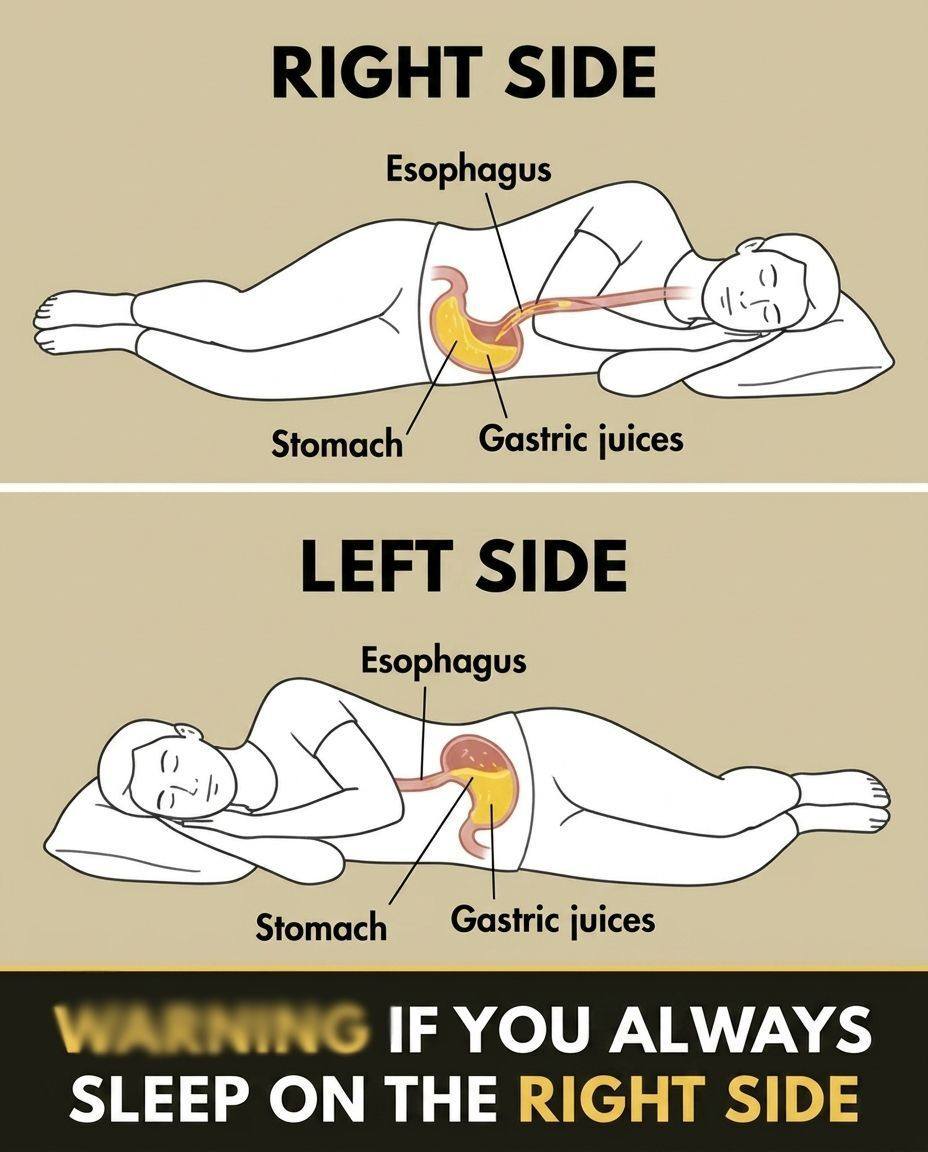
Some research suggests that lying on the right side may slow stomach emptying slightly compared to left-side sleeping. For most healthy individuals, this is not harmful.
However, people prone to acid reflux or heartburn sometimes notice symptoms worsening when lying on the right side after meals.
If you experience nighttime discomfort, small adjustments help:
- Avoid heavy meals before bed
- Elevate your upper body slightly
- Wait two to three hours after eating before sleeping
The goal isn’t to eliminate right-side sleeping but to support digestion naturally.
Circulation and Heart Considerations
Many people wonder whether one side is better for heart health.
Sleeping on the right side may feel more comfortable for some individuals because it reduces awareness of heartbeat sensations. People who sleep on their left side sometimes notice stronger heartbeat perception due to heart positioning.
Neither side is universally “correct.”
Comfort and proper alignment matter more than strict rules. If your sleep feels restful and you wake without pain, your body is likely adapting well.
Shoulder and Arm Pressure
One downside of always sleeping on the same side is pressure buildup.
Your shoulder bears much of your upper body weight throughout the night. Over time, this can lead to numbness, tingling, or soreness.
To prevent this, experts recommend:
- Using a mattress that relieves pressure points
- Hugging a body pillow to support the upper arm
- Occasionally switching sides during sleep
Even slight movement during the night helps distribute pressure evenly.
Breathing and Snoring Benefits
Right-side sleeping can improve breathing for many people, particularly those who snore when lying on their back.
Side sleeping prevents the tongue and soft tissues from collapsing backward into the airway. This keeps breathing passages more open and may reduce mild sleep apnea symptoms.
Because of this, doctors often encourage side sleeping as a healthier alternative to back sleeping for individuals with breathing disruptions.
The Habit of Sleeping on One Side
Humans are creatures of habit, and sleep position becomes deeply ingrained over time.
But staying in one fixed posture all night isn’t necessary — or realistic. The body naturally shifts positions during sleep cycles, even if you start on your preferred side.
The goal isn’t perfection.
It’s comfort combined with support.
Signs You May Need Adjustments
If you always sleep on your right side, pay attention to morning signals from your body:
- Persistent shoulder soreness
- Neck stiffness
- Lower back pain
- Tingling arms or hands
- Frequent nighttime awakenings
These signs suggest alignment could be improved with better pillows, mattress support, or minor position changes.
Building a Healthier Sleep Environment
Good sleep involves more than position alone.
Consider these additional factors:
- Maintain a consistent bedtime routine
- Keep the room cool and dark
- Limit screen exposure before bed
- Choose a mattress suited to your body type
- Replace worn pillows regularly
When sleep environment and posture work together, rest becomes deeper and more restorative.
The Real Message Behind the Headline
So what should you have if you always sleep on your right side?
Not fear.
Not drastic change.
You should have proper support, balanced alignment, and awareness of your body’s comfort.
Sleep is deeply personal. The best position is the one that allows you to wake feeling refreshed, pain-free, and energized.
Rather than chasing a perfect posture, focus on listening to your body’s signals and making small improvements that support long-term well-being.
Because sometimes the biggest health upgrade isn’t sleeping differently — it’s simply sleeping smarter.