Hidden Warning Behind the Purple Fence Revealed — Experts Urge Hikers and Homeowners to Learn the Chilling Legal Truth Before It’s Too Late
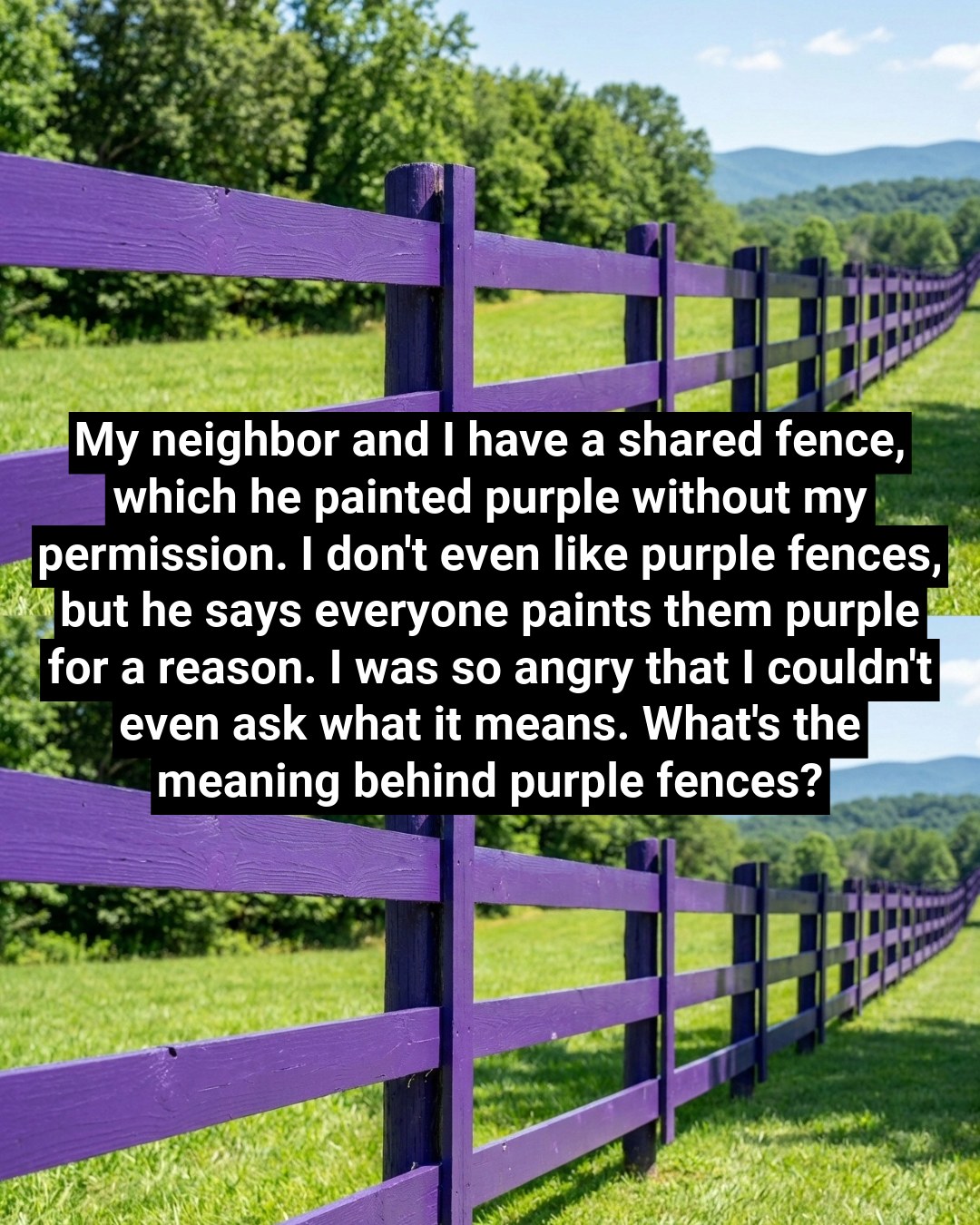
If you’ve ever been hiking through the countryside, exploring wooded trails, or driving past farmland and noticed trees or fence posts marked with bright purple paint, you may have wondered what it means. To many people, it looks random — maybe decorative, maybe leftover from construction.
But experts say that assumption could lead to serious legal consequences.
Across large parts of the United States, that purple marking is not decoration at all. It’s a legal warning, and misunderstanding it could result in fines, confrontation, or even criminal charges.
Here’s the hidden truth behind the purple fence — and why hikers, hunters, photographers, and homeowners are being urged to learn its meaning now.
The Purple Paint Law Explained
The so-called Purple Paint Law allows property owners to mark boundaries using purple paint instead of traditional “No Trespassing” signs.
Rather than posting dozens of signs that can fade, fall, or be stolen, landowners apply vertical purple marks on trees, posts, or fences to signal a clear legal message:
Do not enter. Private property.
The system has been adopted in multiple states, including Texas, Arkansas, Missouri, North Carolina, and Illinois, with others considering similar legislation.
Legal experts say many Americans remain unaware that purple paint carries the same authority as a posted warning sign.
Why Purple?
The choice of color wasn’t random.
Lawmakers selected purple for several practical reasons:
- It stands out clearly in natural environments
- It’s less likely to be mistaken for trail markers
- It remains visible longer than paper signs
- It’s recognizable even from a distance
Unlike red or orange paint — often used for forestry or construction — purple was chosen specifically to represent property restriction.
In short: if you see purple paint markings, you are crossing into legally protected territory.
How the Markings Work
While exact rules vary by state, most laws follow similar guidelines.
Typically, a valid purple paint mark must:
- Be placed between 3 and 5 feet above the ground
- Appear as a vertical line or rectangle
- Be clearly visible without obstruction
- Be spaced at regular intervals along property boundaries
These requirements ensure that markings are intentional and recognizable, preventing confusion with accidental paint or environmental markings.
Experts stress that hikers cannot claim ignorance if markings meet legal standards.
The Risk for Hikers and Outdoor Enthusiasts
Many outdoor lovers assume that rural land is public unless fenced or signed. That assumption used to be common — but purple paint laws changed the landscape.
Imagine this scenario:
A hiker follows a scenic trail that gradually leaves public land. There’s no gate. No sign. Just quiet woods and a few purple stripes on nearby trees.
Crossing that line could legally qualify as trespassing.
Depending on the state and circumstances, consequences may include:
- warnings from landowners
- citations or fines
- confiscation of hunting equipment
- misdemeanor trespassing charges
Wildlife officials report that some violations happen simply because visitors don’t recognize the meaning of the paint.
Why Homeowners Support the Law
From a landowner’s perspective, the law solves several long-standing problems.
Traditional “No Trespassing” signs often:
- blow away during storms
- fade in sunlight
- get vandalized or stolen
- require constant replacement
Purple paint offers a durable, low-maintenance solution.
Farmers, ranchers, and rural homeowners say it helps protect livestock, crops, and personal safety without creating visual clutter across acres of land.
For many, it’s not about excluding people — it’s about preventing accidents and liability issues.
A Growing Safety Concern
Experts warn that misunderstanding property boundaries isn’t just a legal risk — it can also become dangerous.
Rural land may contain:
- hunting activity
- livestock protection measures
- private security patrols
- hazardous terrain or equipment
When strangers unknowingly enter marked property, tensions can rise quickly.
Law enforcement officials emphasize that recognizing purple paint helps avoid confrontations before they start.
The Hidden Legal Reality
One of the most surprising aspects of purple paint laws is that they carry equal legal weight to written signage.
That means courts generally treat a clearly marked purple boundary the same as a posted warning.
Legal analysts note that many trespassing defenses fail because individuals admit they saw the markings but didn’t understand them.
Ignorance of the law rarely protects against enforcement.
What Experts Want Everyone to Know
Outdoor safety specialists recommend three simple rules:
1. Learn Before You Explore
Research local property laws before hiking or hunting in unfamiliar areas.
2. Watch for Color Markings
Trail markers are usually bright colors placed horizontally or symbolically — purple boundary marks are typically vertical and repetitive.
3. When in Doubt, Turn Around
If you’re unsure whether land is private, leaving the area immediately is the safest choice.
These precautions can prevent legal trouble and protect relationships between landowners and outdoor communities.
The Perspective of Conservationists
Interestingly, conservation groups have also supported purple paint laws.
Clear boundaries help:
- reduce environmental damage from unregulated access
- protect wildlife habitats
- prevent unauthorized vehicle traffic
- preserve private conservation land
By guiding visitors away from restricted areas, the markings indirectly support responsible land stewardship.
Why Awareness Is Increasing Now
In recent years, social media posts showing mysterious purple fences sparked curiosity — and sometimes alarm. Viral videos describing “secret warnings” or “hidden dangers” spread quickly, often exaggerating the reality.
Experts clarify that the system isn’t sinister or new; it’s simply under-publicized.
As more states adopt the law, public education has become essential.
The goal isn’t fear — it’s awareness.
Tips for Homeowners Considering Purple Paint
If you own rural property and want to use the marking system, experts suggest:
- checking your state’s exact legal requirements
- using official outdoor marking paint designed for visibility
- maintaining consistent spacing between marks
- avoiding confusion with recreational trail colors
Proper use ensures markings remain legally enforceable.
A Simple Mark With Serious Meaning
At first glance, a purple stripe on a tree may seem harmless — even artistic. But in many parts of the country, it represents a clear boundary backed by law.
The “hidden warning” behind the purple fence isn’t meant to intimidate hikers or neighbors. Instead, it serves as a practical communication tool between landowners and the public.
Understanding its meaning protects everyone:
- hikers avoid legal trouble
- homeowners safeguard property
- outdoor spaces remain safer for all
Final Thoughts
The next time you explore nature and notice purple paint on a fence post or tree, remember: it’s not decoration.
It’s a message.
A quiet, unmistakable signal that you’ve reached the edge of private land — one that experts say every American should recognize before stepping forward.
Because sometimes, the most important warning signs aren’t written in words at all… they’re painted in purple.