Every so often, social media posts or viral headlines claim that having two small indentations—or what some people call “holes”—in the lower back reveals something mysterious about personality, health, attractiveness, or even sexuality. These posts usually end with a dramatic “See more…” designed to spark curiosity.
But what does science actually say?
The truth is fascinating, completely natural, and far less sensational than the internet sometimes suggests.
The Real Name: Dimples of Venus (or Apollo)
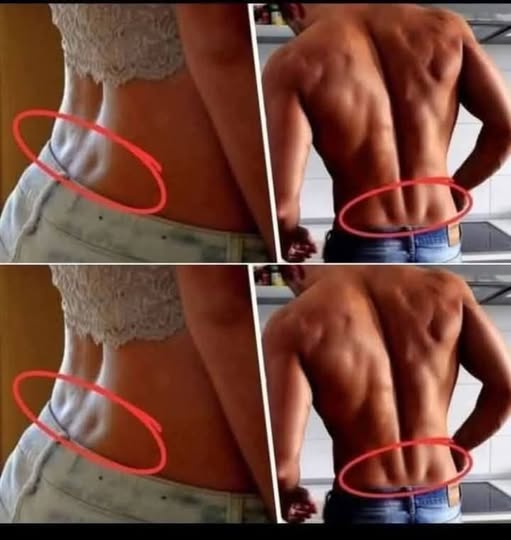
Those two small indentations located symmetrically on the lower back are known anatomically as back dimples. In women, they are commonly called Dimples of Venus, while in men they are sometimes referred to as Dimples of Apollo.
They appear just above the buttocks where the pelvis meets the spine, near a bone landmark called the posterior superior iliac spine. Unlike facial dimples, these are not created by muscles—they are primarily structural features related to bone and ligament placement.
In simple terms: they are a normal variation of human anatomy.
Why Do Some People Have Them?
Back dimples occur because of how the skin connects to underlying ligaments attached to the pelvis. When the distance between skin and bone is shorter in that area, small indentations become visible.
Several factors influence whether someone has them:
1. Genetics
The biggest determinant is heredity. If your parents or close relatives have back dimples, you are more likely to have them too. They are not something you can intentionally create.
2. Bone Structure
Pelvic shape plays a major role. People whose pelvic bones sit closer to the surface tend to display visible dimples.
3. Body Fat Distribution
Lower body fat levels can make dimples more noticeable, though they can appear on people of many body types. Contrary to popular belief, they are not exclusive to thin or athletic individuals.
Are Back Dimples a Sign of Good Health?
One of the most persistent internet myths claims that these indentations indicate superior health or physical fitness. Science does not support this idea.
Having back dimples does not automatically mean:
- Better metabolism
- Stronger immune system
- Higher athletic ability
- Improved reproductive health
They are simply anatomical features, much like freckles, eye color, or height.
However, because they often become more visible when muscles are toned and posture is strong, people sometimes associate them with fitness. The appearance is indirect—not a biological health marker.
The Attraction Myth: Why People Find Them Appealing
Throughout history, certain physical traits become culturally linked with attractiveness. Back dimples gained attention partly through art and fashion photography, where the lower back is viewed as a visually balanced and symmetrical area of the body.
Psychologists suggest a few reasons why many people perceive them as attractive:
- Symmetry, which humans naturally associate with beauty.
- Pelvic alignment, subtly signaling physical maturity.
- Movement emphasis, since the lower back shifts during walking and dancing.
Importantly, attractiveness is subjective. Many people without back dimples are considered equally attractive; beauty standards constantly evolve.
Do Back Dimples Affect Physical Performance?
No scientific evidence shows that back dimples improve or hinder strength, flexibility, or athletic performance.
They do not influence:
- Running speed
- Core strength
- Posture quality
- Sexual performance
The muscles responsible for movement lie deeper beneath the surface and function independently of these indentations.
Medical Perspective: Are They Ever a Concern?
In adults, back dimples are almost always harmless.
Doctors generally consider them a normal anatomical variation requiring no treatment or medical attention.
The only time dimples receive medical evaluation is in newborns. Certain deep spinal dimples present at birth can occasionally signal underlying spinal conditions, but these are very different from the cosmetic back dimples seen in adults.
For grown individuals, they are simply part of normal body diversity.
Can You Get Back Dimples Through Exercise?
This is another widespread misconception.
You cannot directly create true back dimples through workouts because they depend on skeletal structure and ligament placement.
However, strengthening surrounding muscles can make them more visible. Exercises that enhance the lower back and glutes include:
- Deadlifts
- Squats
- Hip thrusts
- Core stabilization exercises
- Pilates and yoga movements
These workouts improve posture and muscle tone, which may highlight existing dimples—but they cannot generate new ones if your anatomy does not naturally include them.
Social Media Myths vs. Reality
Many viral posts attach dramatic meanings to back dimples, claiming they indicate:
- Exceptional fertility
- Higher intimacy drive
- Special personality traits
- Hidden medical advantages
None of these claims have scientific backing.
They persist because click-driven content thrives on mystery and exclusivity. Suggesting that a physical feature makes someone “rare” or “special” encourages sharing and engagement—even when evidence is lacking.
Understanding anatomy helps separate fascination from fact.
Cultural and Historical Views
Interestingly, admiration for lower-back symmetry dates back centuries. Classical sculptures and Renaissance paintings often emphasized this region of the body, portraying gentle indentations above the hips as symbols of grace and balance.
Modern fashion and fitness culture revived interest in back dimples, especially through photography, dance, and swimwear trends. Today, they are sometimes viewed as an aesthetic feature—but cultural meaning changes across time and place.
Body Positivity and Individual Variation
Perhaps the most important takeaway is this:
Human bodies vary enormously.
Some people have back dimples. Others do not. Neither condition is better, healthier, or more desirable in any universal sense.
Body positivity encourages appreciation of natural variation rather than chasing specific traits promoted online. Features like dimples, stretch marks, freckles, or scars all reflect the uniqueness of individual anatomy.
When to See a Doctor
While back dimples themselves are harmless, you should consult a healthcare professional if you experience:
- Persistent lower-back pain
- Swelling or redness around the area
- Sudden changes accompanied by discomfort
These symptoms would relate to underlying musculoskeletal issues—not the dimples themselves.