**The Devil’s Sea: Pacific Waters of Endless Disappearances**
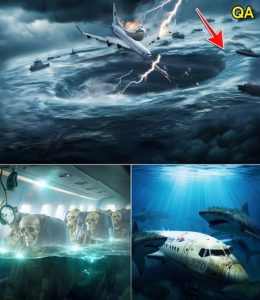
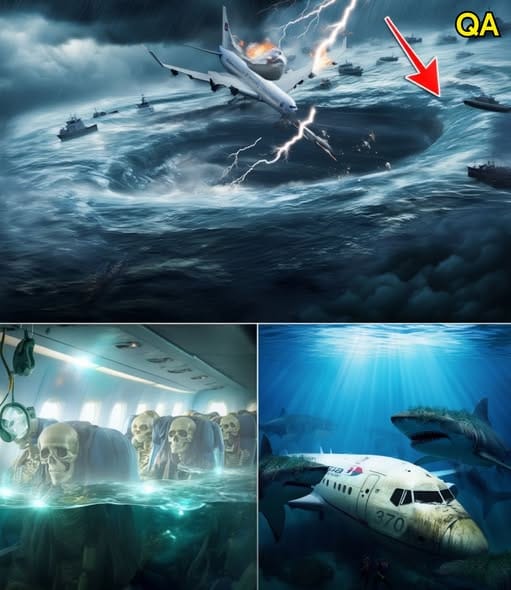
Far off the coast of Japan, in the vast expanse of the Pacific Ocean, lies a stretch of water long whispered about in fear and legend. Known as the Devil’s Sea — or *Ma no Umi* in Japanese — this region is also called the Dragon’s Triangle, the Formosa Triangle, and sometimes the Pacific Bermuda Triangle. Centered roughly around the Izu Islands south of Tokyo, extending toward the Bonin Islands and Taiwan, these waters have earned a reputation for swallowing ships, aircraft, and crews without a trace. For centuries, fishermen, sailors, and aviators have approached with caution, telling stories of sudden storms, glowing seas, compass failures, and massive creatures rising from the depths.
While skeptics dismiss many accounts as exaggerated folklore or poor record-keeping, the Devil’s Sea continues to captivate imaginations worldwide. Its mysteries blend ancient myth with modern maritime hazards in one of the most geologically active zones on Earth.
Ancient Legends and Early Warnings
Japanese folklore has long described these waters as cursed. Tales speak of dragons lurking beneath the surface, their movements stirring violent waves, whirlpools, and thick fogs capable of dragging vessels into the abyss. Some legends date back over a thousand years, with references to “dragon palaces” and seas that claimed entire fleets.
In the 13th century, Mongol emperor Kublai Khan launched massive invasions of Japan. Twice, his enormous fleets were devastated while crossing these waters — events some attribute to typhoons but others link to the Devil’s Sea’s unpredictable nature. Centuries later, during the Edo period, local fishermen avoided certain zones, reporting sudden disappearances and eerie lights.
By the 20th century, the legends gained international attention. In the 1950s, as Japan rebuilt after World War II, a string of maritime losses thrust the Devil’s Sea into the spotlight. Paranormal author Charles Berlitz popularized it in books like *The Bermuda Triangle* (1974) and *The Dragon’s Triangle* (1989), drawing parallels to its Atlantic counterpart.
### The Wave of Disappearances: Key Incidents
The most infamous cluster occurred between 1952 and 1954. Japanese authorities reported at least five military and fishing vessels vanishing in the area, with over 700 lives lost according to some accounts. The waters were so notorious that the government officially declared parts of the Devil’s Sea a danger zone in 1950, restricting shipping.
The pinnacle of the mystery came in 1952 with the research vessel *Kaiyo Maru No. 5*. Sent by the Japanese government to investigate the recent losses, the ship carried 31 crew members and scientists. It was conducting oceanographic surveys when it suddenly went silent. Despite extensive searches, no wreckage or survivors were initially found. Some reports later mentioned partial recovery of debris, but the exact fate of the crew remains unknown. The vessel’s disappearance while on a mission to explain the anomalies only deepened the enigma.
Other cases add to the lore. In 1944, during wartime, Imperial Japanese Navy pilot Toshiaki Lang reported sighting a massive sea serpent — a 150-foot creature with wings emerging from churning waters. Fishing boats vanished in calm conditions. In 1980, the *MV Derbyshire*, a large bulk carrier, disappeared during a typhoon while sailing toward Japan, though heavy weather was a factor.
Aircraft have also fallen victim. A 1957 U.S. military flight from Micronesia to Tokyo with 67 personnel vanished in clear conditions after eight uneventful hours. Reports of compass malfunctions and radio static are common in survivor and witness accounts. While many incidents lack rigorous documentation — a challenge in pre-satellite eras — the pattern of sudden, traceless losses persists.
### Scientific Explanations in a Volatile Region
Unlike purely supernatural claims, the Devil’s Sea sits in the Pacific Ring of Fire, one of the most seismically active areas on the planet. This explains much of the danger through natural forces.
Underwater volcanoes and tectonic activity are primary suspects. Sudden eruptions can generate powerful shockwaves, tsunamis, or gas releases capable of sinking ships instantly. Islands in the region have been known to appear and disappear due to volcanic action. The *Kaiyo Maru No. 5* may have been lost to such an event, with seafloor heat spikes recorded before its disappearance.
Methane hydrates — ice-like deposits on the seafloor — offer another rational theory. When disturbed by seismic activity, they can release massive gas bubbles, reducing water density and buoyancy. Ships caught in such eruptions can sink rapidly with little debris left on the surface. This phenomenon could explain traceless vanishings.
Magnetic anomalies also play a role. Variations in Earth’s magnetic field in this area can interfere with compasses and navigation equipment, leading vessels off course into hazardous zones. Combined with rogue waves — massive, unexpected walls of water — and the region’s notorious typhoons, the Devil’s Sea becomes a perfect storm of maritime peril. Strong ocean currents where warm and cold waters meet add to the volatility.
Skeptics note that the Pacific is enormous, and shipping traffic is heavy. Statistically, disappearances occur globally, but the Devil’s Sea’s dramatic folklore amplifies its reputation. Improved GPS, weather forecasting, and communication have reduced incidents in recent decades, though the legends endure.
### Cultural Impact and Modern Fascination
The Devil’s Sea mirrors the Bermuda Triangle in public imagination. Both tap into humanity’s fear of the unknown ocean and our desire for mystery in an explained world. Documentaries, books, and online forums keep the stories alive, often blending fact with speculation about UFOs, lost civilizations, or portals.
For Japan, the sea represents both cultural heritage and a reminder of nature’s power. Local communities still share cautionary tales, while scientists continue studying the geology. Tourism occasionally highlights the region through “mystery cruises,” though safety remains paramount.
In popular culture, it appears in video games, anime, and conspiracy theories. Some link it to broader “vile vortices” proposed by researchers like Ivan Sanderson — areas of supposed paranormal activity around the globe.
### A Sea That Still Holds Secrets
The Devil’s Sea is not likely to yield a single, sensational answer. Its dangers stem from a potent mix of geology, weather, and human vulnerability. Yet the enduring stories remind us that the ocean — covering most of our planet — still conceals much.
As climate change alters currents and seismic risks persist, monitoring this region grows more important. Modern explorers equipped with advanced sonar, submersibles, and satellites continue probing its depths, occasionally uncovering shipwrecks that add pieces to the puzzle.
For those who sail its waters, respect is the best defense. The dragons of legend may be metaphorical, but the forces they represent — raw, unpredictable nature — are very real. In the Devil’s Sea, the line between myth and maritime reality remains as elusive as the vessels it has claimed.
Whether you view it as a paranormal hotspot or a cautionary tale of Earth’s power, one truth stands: these Pacific waters command awe and vigilance. The disappearances may never fully stop, but our understanding deepens with each passing year.
**Live Updates and Further Reading:**
Ongoing seismic monitoring by Japan’s agencies continues. Documentaries like those from NHNZ explore survivor accounts and scientific surveys. For balanced views, consult marine safety reports alongside folklore collections.