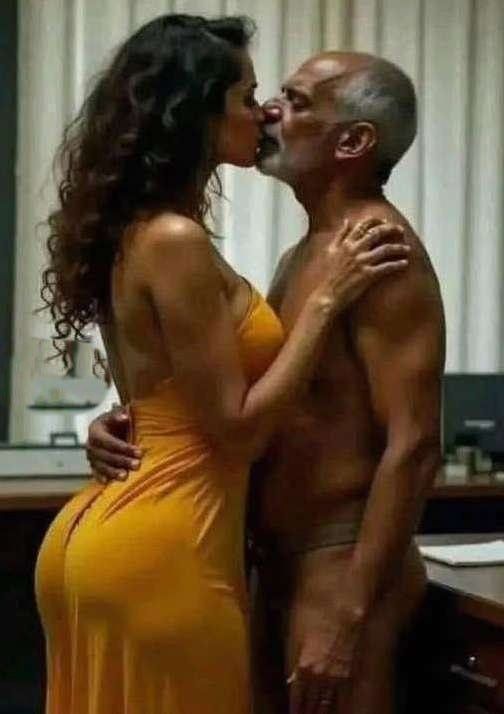
If When You Make Love, Your Partner Doesn’t Kiss You, It’s Because…
Social media is full of attention-grabbing relationship claims that promise to reveal hidden truths about love and intimacy. One common example is the statement: “If when you make love, your partner doesn’t kiss you, it’s because…” These posts often suggest that a single behavior can reveal everything about a person’s feelings, intentions, or commitment.
The reality, however, is usually far more complex.
Relationships are built on communication, trust, emotional connection, personal preferences, and individual experiences. While kissing can certainly be an important expression of affection, the absence of kissing during intimate moments does not automatically mean a relationship is unhealthy or that a partner lacks feelings.
People express love and affection in different ways. Some individuals are naturally very affectionate and enjoy frequent kissing, hugging, hand-holding, and other forms of physical closeness. Others may express their feelings through acts of service, quality time, thoughtful gestures, gifts, or words of affirmation.
Because everyone communicates affection differently, it is dangerous to draw major conclusions from one behavior alone.
For some couples, kissing is an essential part of intimacy. It creates emotional closeness and helps reinforce feelings of connection. Many people describe kissing as one of the most romantic aspects of a relationship because it often feels personal, vulnerable, and emotionally meaningful.
When kissing is present, it can strengthen the bond between partners. It allows them to communicate affection without words and can contribute to feelings of comfort, security, and trust.
However, if kissing is absent, there may be many possible explanations.
One possibility is simple personal preference. Not everyone enjoys kissing to the same degree. Some people prefer other forms of affection and may not place as much emotional significance on kissing as their partners do.
Another factor may be cultural background. Different cultures have varying attitudes toward physical affection. What feels normal and expected in one culture may feel less important in another.
Stress can also play a role. Work pressures, financial concerns, family responsibilities, and emotional strain can affect how people express affection. A person dealing with significant stress may unintentionally become less physically expressive, even if their feelings for their partner remain strong.
Health-related issues can also influence behavior. Fatigue, illness, anxiety, depression, medication side effects, or other personal challenges may affect a person’s desire for physical closeness.
Past experiences can be important as well. Someone who grew up in an environment where affection was rarely expressed may struggle to demonstrate physical intimacy in ways that come naturally to others. This does not necessarily reflect a lack of love; it may simply reflect learned behavior patterns.
Communication problems can sometimes contribute to misunderstandings. One partner may assume that certain actions are understood as expressions of love, while the other may feel emotionally disconnected because their preferred form of affection is missing.
This is why open conversations are often more valuable than assumptions.
Rather than asking, “Why doesn’t my partner kiss me?” it can be helpful to discuss emotional needs honestly and respectfully. A conversation may reveal that both partners care deeply for each other but have different expectations regarding affection.
Healthy communication allows couples to understand each other’s perspectives and find ways to strengthen their connection.
At the same time, context matters.
If the absence of kissing is accompanied by emotional distance, avoidance, lack of communication, declining affection, or ongoing relationship difficulties, it may be worth exploring the broader dynamics of the relationship. In such situations, the issue may not be about kissing itself but about larger concerns affecting emotional intimacy.
Strong relationships are rarely defined by a single behavior. Instead, they are shaped by patterns of interaction over time.
Does your partner support you during difficult moments?
Do they listen when you need someone to talk to?
Do they show respect for your feelings?
Do they make an effort to spend time with you?
Do they demonstrate care through their actions?
These questions often provide a more accurate picture of relationship health than any viral social-media claim.
The internet frequently promotes simple explanations because they attract attention. Statements like “If your partner does this, it means that” can seem convincing because they offer quick answers to complicated emotional questions.
Unfortunately, human relationships are rarely that simple.
Every couple develops their own unique way of expressing affection and maintaining connection. What matters most is whether both partners feel valued, respected, and emotionally fulfilled.
If one person feels hurt by the absence of kissing, that feeling is valid and deserves discussion. Emotional needs differ from person to person, and expressing those needs openly can help strengthen understanding between partners.
A loving relationship thrives when both individuals feel comfortable sharing their thoughts, concerns, and expectations without fear of judgment.
Ultimately, if your partner doesn’t kiss you during intimate moments, there may be many possible reasons. It could reflect personal preference, stress, communication differences, cultural influences, past experiences, or other factors entirely unrelated to the strength of their feelings.
The most reliable answer is not found in a viral post or a dramatic headline. It is found through honest conversation, mutual understanding, and a willingness to listen to one another.
Relationships are complex, and genuine connection is built not on assumptions but on communication, trust, empathy, and shared effort. Those qualities, far more than any single gesture, determine the strength and longevity of a partnership.