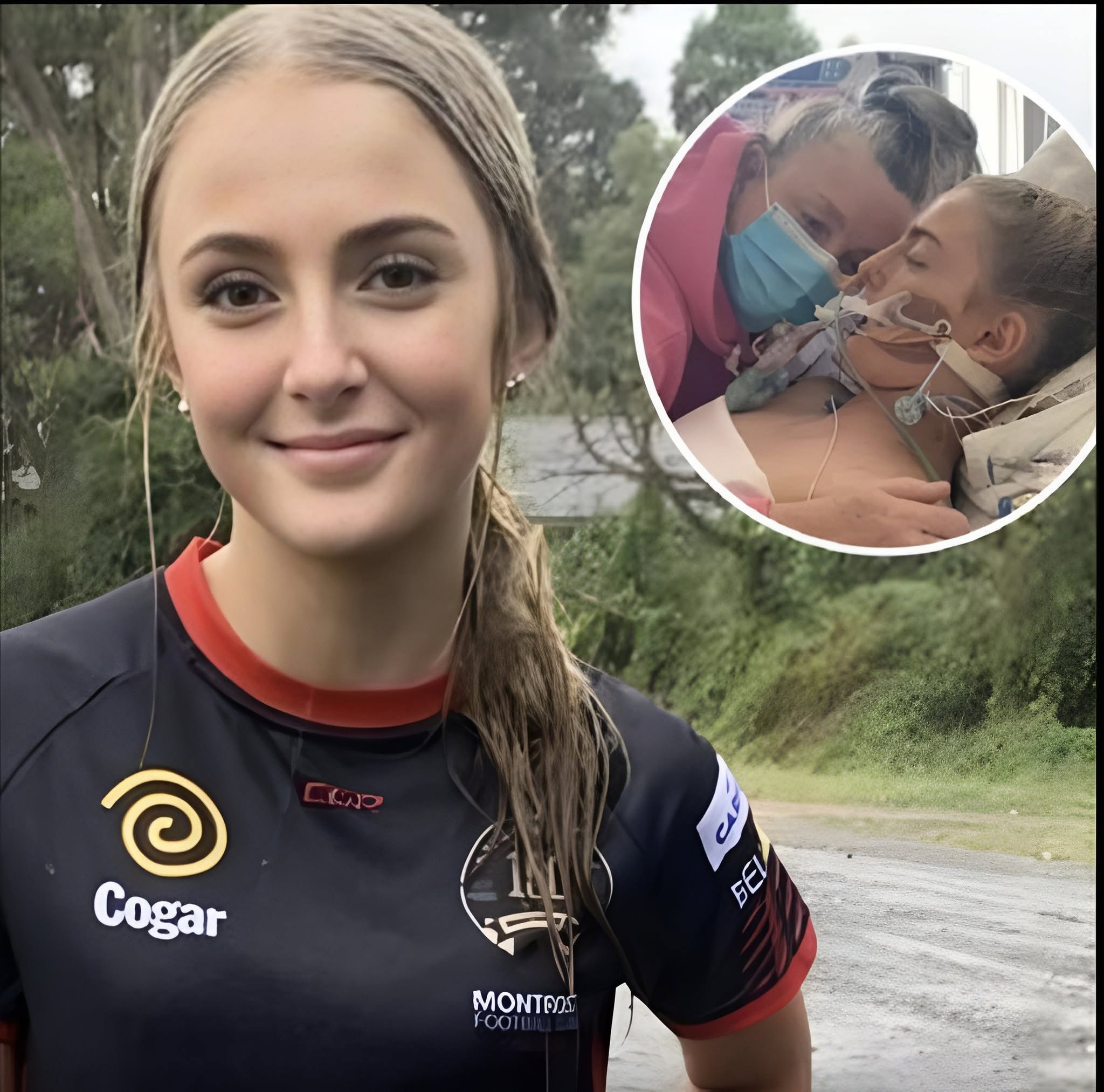
**Heartbroken Parents Had to Make the Painful Decision to End Life Support for Their 13-Year-Old Daughter Following a Sleepover Nightmare. They Are Now Warning Others to Prevent Similar Tragedies.**
In March 2023, a routine sleepover among friends turned into an unimaginable nightmare for the Haynes family in Melbourne, Australia. Esra Haynes, a vibrant 13-year-old Year 8 student at Lilydale High School, went into cardiac arrest after participating in a dangerous trend known as “chroming.” Eight days later, her devastated parents, Paul and Andrea, faced the heart-wrenching decision to turn off her life support. Her brain had suffered irreversible damage. Today, the family channels their grief into advocacy, urging parents, teens, and communities to learn about the lethal risks of inhalant abuse.
Esra was described by those who knew her as a “beautiful,” “cheeky,” and energetic girl. She was a talented athlete, co-captain of her Australian Football League (AFL) team, and a loving sister to Imogen, Seth, and Charlie. Sleepovers were a normal part of her social life. Her parents trusted the setup: they knew where she was and who she was with. “It was just the regular routine of going to hang out with her mates,” Andrea recalled in an interview with *A Current Affair*.
That night, March 31, 2023, changed everything. At the sleepover, Esra and some friends experimented with chroming—inhaling fumes from aerosol deodorant cans for a quick high. The practice, also called huffing or sniffing, involves breathing in volatile chemicals like those in spray paints, solvents, or household aerosols. Paramedics arrived to find Esra unresponsive and worked desperately to revive her. They informed her mother that the teen had been chroming.
Esra was rushed to the hospital, where she was placed on life support. For eight agonizing days, her family held onto hope. Doctors eventually delivered the devastating news: her brain was damaged beyond repair. The family gathered—parents, siblings, and loved ones—to say their final goodbyes. They cuddled her until the end. “They’re asking us to bring family, friends to say goodbye to our 13-year-old daughter,” Paul said. “It was a very, very difficult thing to do to such a young soul.”
The decision to end life support is one no parent should ever face. It represents the ultimate act of love and mercy in the face of irreversible loss. For the Haynes family, it marked the beginning of a new, painful chapter defined by absence. “We’ve got no child to bring home,” Andrea reflected on the ripple effects of their loss.
### Understanding Chroming: A Hidden Danger
Chroming is not new, but social media has amplified its visibility among teens seeking cheap, accessible thrills. The term originally referred to inhaling chrome-based spray paints but now broadly covers any aerosol or solvent inhalation. Common household items—deodorants, air fresheners, paints, glue, or nail polish remover—contain hydrocarbons and propellants that produce euphoric effects when inhaled. These chemicals displace oxygen in the lungs and rapidly affect the central nervous system.
The high is short-lived, often lasting minutes, leading users to repeat the process. However, the risks are immediate and severe. Inhalants can cause:
– **Sudden Sniffing Death Syndrome**: Even first-time users risk fatal cardiac arrhythmia. The chemicals sensitize the heart to adrenaline, and any sudden excitement (like being startled) can trigger a heart attack.
– **Asphyxiation and respiratory failure**: Fumes displace oxygen, leading to suffocation.
– **Neurological damage**: Brain cells are starved of oxygen, causing seizures, coma, or permanent cognitive impairment.
– **Other effects**: Liver and kidney damage, hearing or vision loss, coordination problems, and long-term issues like memory loss, depression, and addiction.
Tragically, death can occur unpredictably—after one use or repeated exposure. Esra’s case highlights how quickly a “harmless” experiment can end a life. Australia has seen multiple teen deaths linked to chroming, including 16-year-olds in prior years. Globally, the trend resurfaces on platforms like TikTok, drawing in curious adolescents who underestimate the dangers.
### The Broader Context and Statistics
Inhalant use remains a significant issue among young people, particularly those aged 12-17. Surveys in Australia indicate that around 13% of secondary students have tried inhalants in the past year, though underreporting is common due to stigma. In the US, hundreds of thousands of adolescents report recent use, with numbers fluctuating but showing concerning persistence.
What makes chroming especially insidious is its accessibility. Unlike illicit drugs, these products sit on supermarket shelves. In response to rising incidents, some Australian retailers began locking up deodorants. Schools have ramped up education, but experts and families like the Hayneses argue more is needed.
### The Haynes Family’s Mission: Turning Grief into Action
Paul and Andrea Haynes refuse to let Esra’s death be in vain. “Her name meant ‘helper,’ so that’s what we’re here to do,” Paul emphasized. They are calling for systemic changes:
– **Reformulation of products**: Manufacturers should alter propellants in aerosols to make them less harmful or less appealing for misuse. Paul likened unlocked deodorant cans to “a pistol sitting on the shelf.”
– **Education and CPR training**: Mandate age-appropriate warnings in schools and teach CPR to all students, with regular refreshers.
– **Social media accountability**: Tighter restrictions on content that glamorizes or demonstrates dangerous challenges.
– **Open conversations**: Parents must talk frankly with children about peer pressure and the finality of poor decisions. “Kids don’t look beyond the next day,” Paul warned. “Esra would never have done this if she would have known the consequences.”
The family’s advocacy has appeared on Australian current affairs programs, spreading awareness far beyond their community. Their message resonates: this could happen to any family. Sleepovers, parties, or casual hangouts can turn tragic in moments of experimentation.
### Supporting Families and Prevention Strategies
For parents, vigilance is key without stifling independence. Strategies include:
– **Education**: Discuss inhalant dangers explicitly. Explain that “one time” can be fatal.
– **Monitoring**: Know your child’s friends and activities. Encourage open dialogue about pressures.
– **Alternatives**: Promote healthy outlets for thrill-seeking, like sports (Esra loved AFL), arts, or outdoor adventures.
– **Signs to watch**: Slurred speech, dizziness, chemical smells on breath or clothes, paint on face/hands, or sudden behavioral changes.
– **Emergency response**: Learn CPR and know that immediate medical help is critical.
Communities, schools, and governments play roles too—through awareness campaigns, product regulations, and mental health support. Bereaved families often need ongoing counseling; organizations focused on grief and substance prevention can help.
Esra’s story is a stark reminder of adolescence’s vulnerabilities. The teenage brain is still developing, particularly the prefrontal cortex responsible for risk assessment. Peer influence and curiosity can override caution. Yet, most kids who experiment survive with scars—physical, emotional, or both. Prevention saves lives.
### A Lasting Legacy
The Haynes family’s pain is profound and ongoing. Holidays, milestones, and everyday moments bring fresh waves of grief. But by sharing Esra’s story, they honor her spirit and protect others. “We need to talk about it,” Paul said. Their courage transforms personal tragedy into public service.
As parents everywhere tuck their children in after sleepovers or watch them head out with friends, Esra’s memory serves as a call to awareness. One conversation, one locked cabinet, one informed choice might prevent another family from facing the same unbearable decision.
Esra Haynes was more than a statistic or a cautionary tale. She was a daughter, sister, teammate, and friend full of life and promise. Her legacy lives on through her family’s advocacy: a plea for vigilance, education, and compassion in a world where hidden dangers lurk in everyday items. Let her story remind us all to look closer, listen harder, and protect the young lives entrusted to us. (Word count: approx. 1,020)
If you or someone you know needs support regarding substance use or grief, reach out to local helplines or organizations specializing in youth prevention and bereavement counseling. Awareness is the first step toward prevention.