The RICO Shockwave: A Hypothetical Political Earthquake in 2026
In early 2026, American politics stood at a crossroads — the fiercest debates in years centered less on policy differences and more on the mechanics of power itself. Against that backdrop, national discourse erupted over one bold legal idea: whether funding for large-scale protests — including money from private donors, foundations, and even overseas backers — could be treated as criminal activity under the Racketeer Influenced and Corrupt Organizations (RICO) Act.
In this speculative scenario, a profound question animated politicians and legal scholars alike: Can political finance cross the line into organized crime if it fuels mass demonstrations perceived as destabilizing?
To unpack this, we must first understand the legal terrain.
What Is RICO, and Why Would Anyone Propose Expanding Its Reach?
The Racketeer Influenced and Corrupt Organizations Act (RICO) was enacted in 1970 and designed to target traditional organized crime — Mafia syndicates, criminal rackets, and enterprises engaged in repeated illegal activities as part of a coordinated pattern.
Under current law, prosecutors must show a pattern of racketeering activity tied to an enterprise — typically defined as a group functioning as a unit — and demonstrate at least two predicate crimes within a defined timeframe. Traditional racketeering offenses include money laundering, bribery, fraud, extortion, and other serious criminal conduct.
In recent decades, RICO’s reach has expanded far beyond the Mafia — it has been invoked in corporate fraud cases, civil lawsuits, public corruption prosecutions, and even actions against ostensibly non-criminal networks.
This broadness is why some hard-line political figures fantasize about applying RICO to modern phenomena like protest networks: to argue that when large sums of money flow through interconnected organizations to influence public demonstrations, these networks could resemble organized enterprises under the law.
Why Protest Funding Is Such a Charged Issue
Across the political spectrum, awareness has grown of how organized funding can shape public engagement. Large foundations and major donors often support advocacy groups and nonprofits that in turn mobilize activists. Analysts have noted that some protest movements receive millions in funding from nonprofit grants, dark-money channels, and coordinated donor networks — though not illegal ones.
For example, philanthropic organizations have supported civil rights advocacy and public policy campaigns; yet because U.S. law prohibits direct payments to individuals simply for protesting, such claims have always been hotly disputed. Opponents of “RICO protest” rhetoric argue that supporting civil society is not the same as paying people to take to the streets — and that freezing bank accounts on that basis would violate free speech and assembly rights.
Legally Stretching RICO: The Nightmare Scenario
In our hypothetical, a faction in Congress — driven by fears of public disorder, economic disruption, and perceived exploitation by powerful funders — seeks to expand RICO’s definition of “racketeering enterprise” to explicitly include coordinated protest financing networks.
Under this theory:
-
Multiple nonprofit entities, PACs, and advocacy groups could be treated as part of a single “enterprise” if they collectively fund or organize protest activity.
-
Donors and foundations, domestic or international, could be viewed as stakeholders in that enterprise.
-
If the Department of Justice — or a future administration — decided such networks constituted racketeering, it could pursue indictments, asset forfeiture, and civil suits under RICO.
In RICO cases, asset seizure and injunctions are powerful tools: prosecutors can seek pre-trial restraining orders to freeze assets and prevent transfer of property before conviction.
Imagine the implications if such authority were claimed over foundations, political action committees, or even individual bank accounts of major donors. Within days, dozens of global accounts tied to donors or organizations could be frozen pending litigation — creating what pundits would call the “RICO shockwave.”
The Political Motivation and Backlash
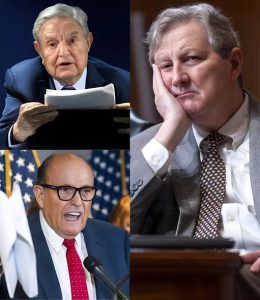
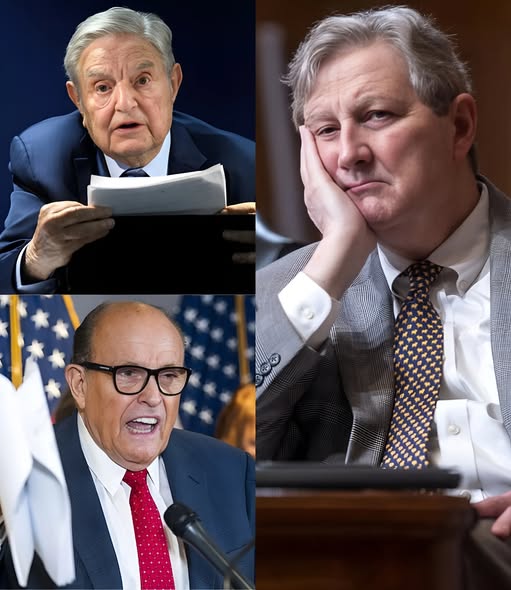
Politically, a move like this would resonate most with lawmakers inclined to paint social movements as threats to public order. Hard-right commentators and some elected officials have previously called for aggressive legal action against wealthy liberal funders like philanthropist George Soros, accusing them of financially empowering protests — although these allegations are routinely denied and fact-checked as false.
Supporters of expanded RICO might portray it as a necessary modernization of law enforcement — after all, organized crime in the digital age does not look like cigar-smoking mob bosses in suits anymore. Networks of funding that influence politics could, they argue, be a disrupter of democratic order.
Yet critics would counter that such a reinterpretation weaponizes federal criminal law against constitutional rights. The First Amendment protects free speech and assembly; using RICO to chill political fundraising would, in their view, undermine fundamental liberties.
Economic and Geopolitical Repercussions
If global accounts linked to “coordinated protest funding” were suddenly frozen under RICO presumptions, the effects would ripple far beyond U.S. politics.
International donors and nonprofits might face unprecedented federal scrutiny, even if they have no criminal intent. Global banks accustomed to strict compliance protocols could be forced to block transactions involving politically sensitive funds at the demand of U.S. prosecutors.
Multinational organizations, philanthropic networks, and advocacy groups could see assets held in U.S.-linked banking systems frozen, prompting diplomatic tensions with governments whose citizens’ funds are ensnared.
Moreover, the chilling effect on free expression could reverberate worldwide: activists and civil society groups in democracies and semi-democracies alike might find themselves unable to receive support or operate effectively, constrained by fear of cross-border legal entanglements.
Legal Challenges and Constitutional Battles
Unsurprisingly, efforts to redescribe protest funding as organized crime would trigger immediate constitutional challenges. Civil liberties organizations would file lawsuits arguing that:
-
RICO was never intended to criminalize political speech or association.
-
Any attempt to freeze accounts without clear evidence of criminal conduct violates due process.
-
Using financial law to suppress dissent amounts to viewpoint discrimination.
Courts would be forced to confront whether RICO’s language could legitimately encompass politically motivated financial networks — a battle potentially headed to the Supreme Court.
Cultural and Democratic Impacts
Even without convictions, the mere possibility of asset freezes and RICO indictments could transform civic life. Donors might stop supporting advocacy out of fear. Protest organizers could become wary of affiliations that expose them to legal jeopardy. Social movements might splinter or go underground.
Public trust in institutions — legal, financial, and political — could fracture further.
Conclusion: A Hypothetical with Real-World Stakes
Although there is no credible evidence that Senator John Neely Kennedy has moved to classify protest funding as organized crime under RICO or that this would immediately freeze global accounts, this thought experiment reveals why such ideas are so potent in today’s political imagination.
It highlights how:
-
RICO’s broad and powerful tools could be misapplied in ways that disrupt civil liberties.
-
Political polarization fuels legal innovation, sometimes beyond constitutional guardrails.
-
Financial systems and political expression are increasingly intertwined, raising difficult legal and ethical questions.
In a world where law and politics are deeply interconnected, even hypothetical proposals can expose real vulnerabilities in democratic systems — and remind us why clarity, evidence, and constitutional safeguards matter more than mere shock value.