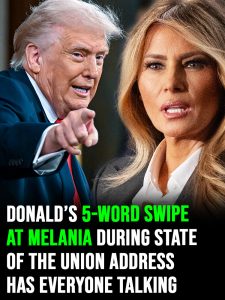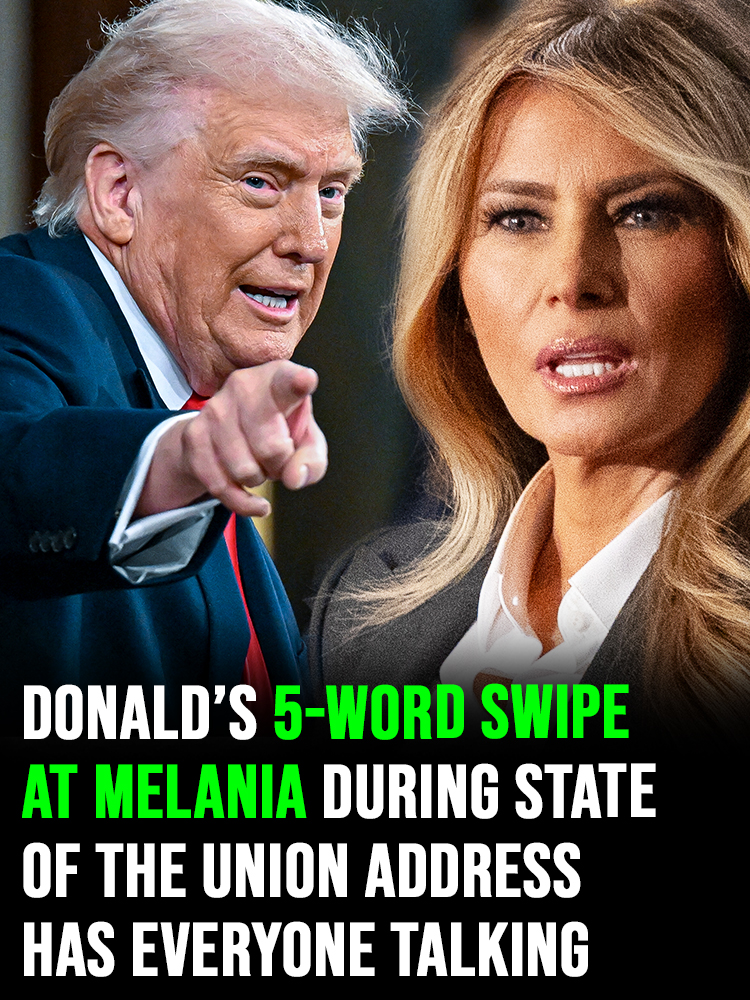
The Viral “Five‑Word Swipe” at Melania: What Actually Happened and Why Everyone Is Talking About It
Political culture in the United States has always had a flair for spectacle, but the modern media ecosystem—supercharged by social platforms, parody accounts, and rapid‑fire commentary—has turned even the smallest rumor into a trending topic. The latest example is the claim that Donald Trump delivered a “five‑word swipe at Melania” during his State of the Union address. The phrase exploded across social media, prompting debates, jokes, and speculation. But when you trace the story back to its source, the reality is far more complicated—and far more revealing about how political narratives form today.
Where the Phrase Came From
Despite the viral buzz, no verified transcript, news report, or reputable political analysis shows Trump making a five‑word jab at Melania during the address. Instead, the phrase appears to have been borrowed from a different viral moment entirely: a comedy sketch featuring actress Laura Benanti, known for her Melania Trump impersonation on The Late Show with Stephen Colbert. In that sketch, the impersonated “Melania” delivers a sharp five‑word punchline about her husband.
A separate viral clip—again featuring an impersonator—includes another five‑word zinger: “I am not his nurse.” This line circulated widely on TikTok and X, racking up millions of views.
Neither of these moments involved the real Melania Trump or the real Donald Trump. But the speed of online sharing blurred the distinction for many viewers, and the phrase “five‑word swipe” became detached from its comedic origins.
Why the Rumor Took Off
Even though the claim wasn’t grounded in the actual State of the Union speech, it spread for several reasons:
1. Melania’s absence from high‑profile events fuels speculation
Melania Trump has long been a subject of fascination because of her selective public appearances. When she does not attend major events—such as campaign rallies or high‑visibility speeches—commentators often fill the silence with speculation. That vacuum makes any rumor involving her feel more plausible.
2. Trump’s rhetorical style invites reinterpretation
Donald Trump’s speeches are known for their improvisational tone, sharp jabs, and unpredictable phrasing. This makes it easy for audiences to believe he might have delivered a five‑word quip, even if he didn’t.
3. Comedy and politics now blend seamlessly
Political impersonators, parody accounts, and late‑night sketches often go viral faster than the events they parody. When millions of people see a comedic line before they see the real speech, the parody can overshadow reality.
4. Social media rewards the punchiest version of a story
A “five‑word swipe” is a perfect viral unit: short, dramatic, and easy to share. Whether or not it happened becomes secondary to how shareable it is.
What Trump Actually Said During the State of the Union
The real State of the Union address focused on Trump’s vision of a “golden age of America,” economic messaging, and attacks on political opponents. It was notable for its length—setting a record—and for the intense partisan reactions inside the chamber.
There was no documented remark—five words or otherwise—directed at Melania.
Why People Were Ready to Believe It
Even though the claim wasn’t factual, it resonated because it fit into existing narratives about the Trump marriage. Over the years, the public has developed a fascination with the dynamic between Donald and Melania Trump. Moments such as her hand‑swatting incidents, her independent schedule, and her sometimes pointed public statements have created a perception—fair or not—of distance or tension.
When a rumor aligns with an existing public storyline, it spreads more easily.
The Role of Impersonators in Shaping Public Perception
Laura Benanti’s Melania impersonation has become so recognizable that many viewers associate her comedic portrayal with the real former First Lady. In the sketch referenced earlier, the impersonated Melania delivers a five‑word line that is intentionally sharp, designed to get a laugh and poke fun at the Trump marriage.
Similarly, the “I am not his nurse” line from another impersonator went viral because it captured a humorous, exaggerated version of Melania’s supposed exasperation.
These comedic portrayals shape public perception, sometimes more powerfully than actual public appearances.
How the Rumor Became Attached to the State of the Union
Here’s the likely chain of events:
- The State of the Union address generated intense online discussion.
- Impersonator clips featuring five‑word jokes about Trump resurfaced or were reshared.
- Some users mistakenly believed—or intentionally implied—that the lines came from the speech.
- The phrase “five‑word swipe at Melania” became a trending shorthand.
- Headlines and posts amplified the phrase without clarifying its origin.
In the modern media environment, this kind of cross‑pollination between satire and reality is common.
Why This Matters
The “five‑word swipe” story is a case study in how political misinformation spreads—not always maliciously, but through a mix of humor, assumption, and rapid sharing. It highlights several broader issues:
1. Satire is increasingly indistinguishable from news
When parody clips circulate without context, viewers may not realize they’re watching comedy.
2. People often share content that confirms their expectations
If someone already believes Trump might make a jab at Melania, they’re more likely to share a claim that he did.
3. Political narratives are shaped by entertainment as much as by policy
Late‑night comedy, impersonators, and viral videos now play a major role in shaping public understanding of political figures.
4. The State of the Union is no longer just a speech—it’s a media event
Reactions, memes, and commentary often overshadow the content of the address itself.
The Bottom Line
There is no evidence that Donald Trump delivered a five‑word swipe at Melania during the State of the Union. The phrase appears to have originated from viral impersonator clips, not from the speech itself.
But the fact that the rumor spread so widely tells us something important: in today’s political culture, the line between reality and satire is thinner than ever. People are primed to believe the most dramatic version of events, especially when it involves high‑profile figures like Donald and Melania Trump.
If you’d like, I can also write:
- a shorter version
- a comedic version
- a fact‑check style breakdown
- or a narrative retelling
Just tell me the tone you want.