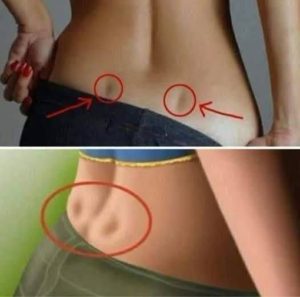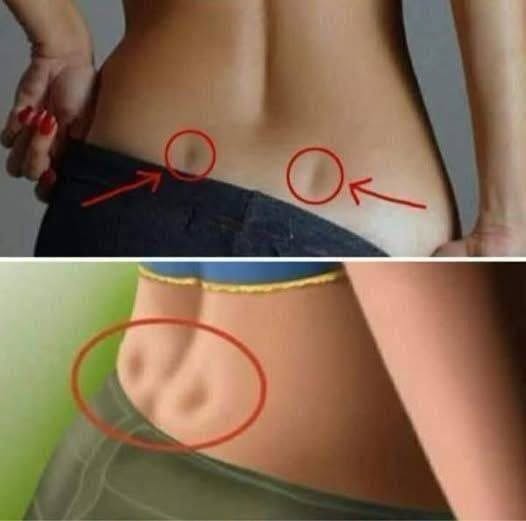
If You Have These Two Holes in Your Lower Back, It Means You Don’t… See More
Every day, social media is flooded with intriguing headlines that promise to reveal hidden secrets about the human body. One of the latest viral claims reads, “If you have these two holes in your back, it means you don’t…” The unfinished sentence encourages readers to click for an explanation, but like many clickbait posts, it often exaggerates or misrepresents the facts.
The “two holes” referred to in these posts are commonly known as dimples of Venus or back dimples. They are small indentations located on the lower back, just above the buttocks, where the pelvis meets the spine. While many people find them aesthetically attractive, they are simply a natural anatomical feature and do not indicate anything extraordinary about a person’s health, personality, or abilities.
What Are Back Dimples?
Back dimples are small indentations caused by the way the skin is attached to the underlying pelvic bone through connective tissue. They are usually inherited and are considered a normal variation in human anatomy.
Some people are born with prominent dimples, while others never develop them. Neither situation is better or worse—they are simply different expressions of normal human genetics.
Are They a Sign of Good Health?
A common myth claims that people with back dimples are healthier than those without them. There is no scientific evidence supporting this belief.
Overall health depends on many factors, including:
- Nutrition
- Regular physical activity
- Sleep
- Genetics
- Medical history
- Lifestyle choices
The presence or absence of back dimples has no proven relationship with general health.
Do They Mean You’re More Athletic?
Another popular claim suggests that back dimples indicate superior athletic ability.
Again, this is not supported by scientific research.
Athletic performance depends on muscle strength, endurance, flexibility, training, and cardiovascular fitness—not on the appearance of the lower back.
Genetics Play the Biggest Role
Back dimples are primarily determined by inherited anatomy.
If one or both of your parents have them, you may be more likely to have them as well.
Because they are related to the structure of the pelvis and connective tissue, exercise cannot reliably create them, nor does their absence indicate excess body fat or poor fitness.
Why Do Some People Notice Them More?
Back dimples may appear more visible in some individuals due to differences in body composition and muscle definition.
For example, people with less body fat around the lower back may have more noticeable dimples.
However, this varies greatly from person to person and is not a measure of health or attractiveness.
Myths on Social Media
Over the years, countless myths have been attached to back dimples.
Some posts claim they indicate:
- Exceptional health
- High fertility
- Special physical abilities
- Certain personality traits
- Greater attractiveness
These claims are based on speculation rather than medical evidence.
What Medical Experts Say
Healthcare professionals generally view back dimples as a harmless anatomical variation.
In adults, they rarely require medical attention.
In newborns, however, some lower back dimples can occasionally be associated with certain spinal conditions. Doctors examine infants carefully to determine whether additional evaluation is needed. This situation is different from the common back dimples seen in healthy adolescents and adults.
Why Clickbait Works
Headlines like “If you have these two holes in your back, it means you don’t…” are intentionally incomplete.
This style of writing creates curiosity and encourages readers to click to discover the ending.
In many cases, the article itself contains little or no scientific support for the original claim.
Appreciating Natural Differences
Human bodies come in an incredible variety of shapes and features.
Some people have freckles.
Others have dimples in their cheeks.
Some have attached earlobes, while others have detached ones.
Back dimples are simply another example of this natural diversity.
Should You Be Concerned?
For most adults, the answer is no.
Back dimples are typically harmless and require no treatment.
If you ever notice sudden pain, swelling, skin changes, or other unusual symptoms in the lower back, it’s appropriate to consult a healthcare professional—but the dimples themselves are usually not a cause for concern.
The Bottom Line
The viral claim that having “two holes” in your lower back means something special is another example of an attention-grabbing headline that oversimplifies human anatomy.
Back dimples, also known as the dimples of Venus, are a normal inherited feature caused by the way the skin connects to the underlying pelvic structures. They do not reliably indicate health, athletic ability, personality, fertility, or any other hidden characteristic.
Rather than relying on sensational social media posts, it’s always better to look for information supported by medical research and trusted healthcare sources. Human anatomy is wonderfully diverse, and features like back dimples are simply one of many normal variations that make every individual unique.