A 9.1-Magnitude Earthquake Triggered a Massive Tsunami — A City’s Fight for Survival (Fiction)
At exactly 7:42 a.m., the peaceful morning along the coastline was shattered by a deep, violent rumble that seemed to come from the heart of the Earth itself. Windows rattled, streets cracked open, and buildings swayed as residents rushed outside in confusion. Within seconds, emergency alerts lit up every phone in the city.
“Major earthquake detected. Seek higher ground immediately. Tsunami warning issued.”
What began as a terrifying earthquake quickly became something even worse.
The powerful 9.1-magnitude quake, one of the strongest ever imagined in this fictional story, struck far beneath the ocean floor. The sudden movement of tectonic plates displaced an enormous volume of seawater, creating a massive tsunami that raced toward the coast at incredible speed.
On the shoreline, fishermen watched the ocean behave strangely. The water retreated hundreds of yards from the beach, exposing rocks, coral, and abandoned boats resting on the sand. Many had never seen such a phenomenon before.
Some people took out their phones to record videos.
Others remembered what disaster experts had always warned: when the sea suddenly disappears after a major earthquake, a tsunami may be only minutes away.
Police officers, firefighters, and emergency volunteers rushed through neighborhoods using loudspeakers.
“Leave everything behind! Get to higher ground now!”
Traffic quickly became chaotic as thousands attempted to flee simultaneously. Parents searched frantically for children at schools while hospitals activated emergency evacuation plans. Elderly residents were helped into rescue vehicles by neighbors they had known for decades.
Then came the sound.
Witnesses later described it as resembling dozens of jet engines roaring together.
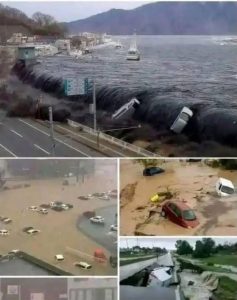
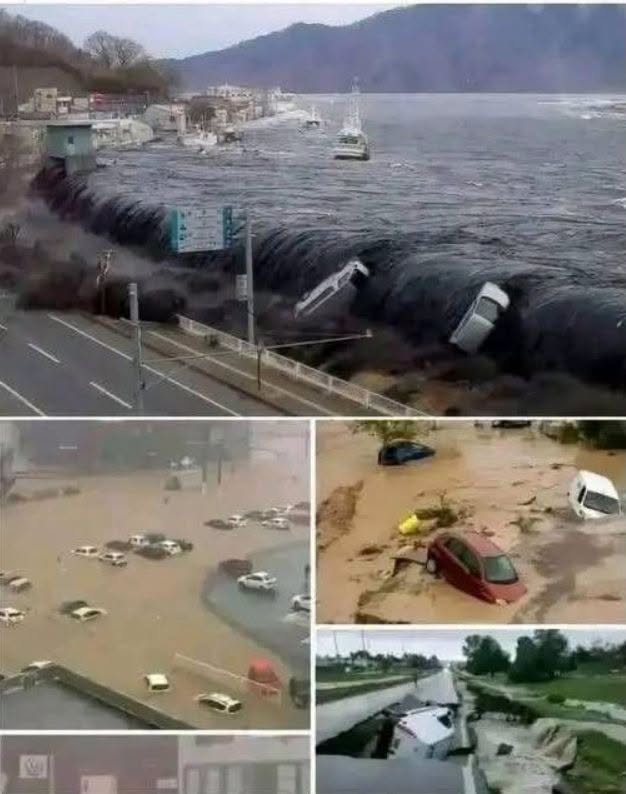
On the horizon, a towering wall of water stretched across the coastline. The wave continued growing as it approached shallow waters, carrying boats, trees, vehicles, and debris in its path.
Within moments, the first surge struck.
Water smashed into buildings with unbelievable force. Streets disappeared beneath swirling floodwaters. Cars floated like toys before crashing into one another. Storefront windows shattered instantly as the current pushed everything inland.
Emergency responders risked their own lives to rescue trapped families. Helicopters circled overhead searching rooftops for survivors waving towels, flashlights, and homemade signs.
Inside the city’s emergency operations center, officials coordinated rescue efforts despite damaged communications and widespread power failures. Backup generators kept essential systems operating while rescue teams mapped flooded neighborhoods.
Throughout the day, aftershocks continued to shake the region, making already damaged buildings even more dangerous. Engineers warned that bridges could collapse without notice, forcing rescue crews to find alternate routes.
Shelters opened in schools, churches, and community centers located safely above the flood zone. Volunteers distributed blankets, bottled water, food, and medical supplies to thousands of displaced residents.
Doctors and nurses worked around the clock treating injuries ranging from cuts and broken bones to hypothermia and exhaustion. Mental health professionals comforted frightened children separated temporarily from family members.
As darkness fell, the city looked completely different.
Entire neighborhoods sat underwater.
Streetlights no longer glowed.
The only illumination came from rescue helicopters, emergency vehicles, and portable floodlights searching for survivors.
Despite the devastation, remarkable acts of courage emerged everywhere.
A school bus driver safely evacuated dozens of children moments before floodwaters engulfed the roadway.
Neighbors formed human chains to help elderly residents cross fast-moving water.
Restaurant owners donated every remaining piece of food from their kitchens to emergency shelters.
Construction workers volunteered heavy equipment to remove debris blocking rescue routes.
Search-and-rescue dogs tirelessly combed damaged structures while specialized teams listened carefully for any sounds beneath collapsed buildings.
International humanitarian organizations soon arrived with additional medical teams, water purification systems, portable hospitals, and emergency supplies. Engineers began inspecting critical infrastructure while utility crews worked to restore electricity and communications.
Scientists explained that large undersea earthquakes have the potential to generate tsunamis when the seafloor moves suddenly, displacing massive amounts of water. Because tsunami waves can travel across oceans at extraordinary speeds, early warning systems are essential for giving coastal communities precious minutes to evacuate.
Experts emphasized that preparedness saves lives. Communities practicing evacuation drills, maintaining warning sirens, and educating residents about natural warning signs generally experience better outcomes during tsunami emergencies.
Weeks later, cleanup efforts continued.
Mountains of debris filled temporary collection sites. Volunteers from across the country joined local residents in removing mud, repairing homes, and supporting affected families.
Schools reopened in temporary buildings.
Businesses gradually resumed operations.
Community memorials honored lives lost while celebrating the bravery of first responders, healthcare workers, volunteers, and ordinary citizens who chose courage over fear.
Although rebuilding would take years, hope slowly returned.
Children once again played in neighborhood parks.
Families reunited after weeks of uncertainty.
Local musicians organized benefit concerts to raise recovery funds.
Artists painted murals symbolizing resilience, strength, and unity.
The fictional disaster became a reminder that while nature’s power can be overwhelming, compassion, preparation, and cooperation often become humanity’s greatest strengths during times of crisis.
As the rebuilt city looked toward the future, one lesson remained clear: disaster preparedness, resilient infrastructure, effective early-warning systems, and strong communities can make an extraordinary difference when the unexpected occurs.
This story is entirely fictional and is not based on a real earthquake or tsunami event.