Growing Celebrity Backlash to Trump’s Iran Military Action
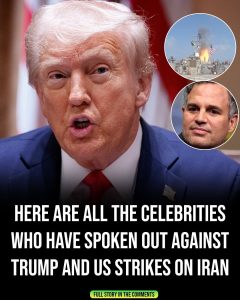
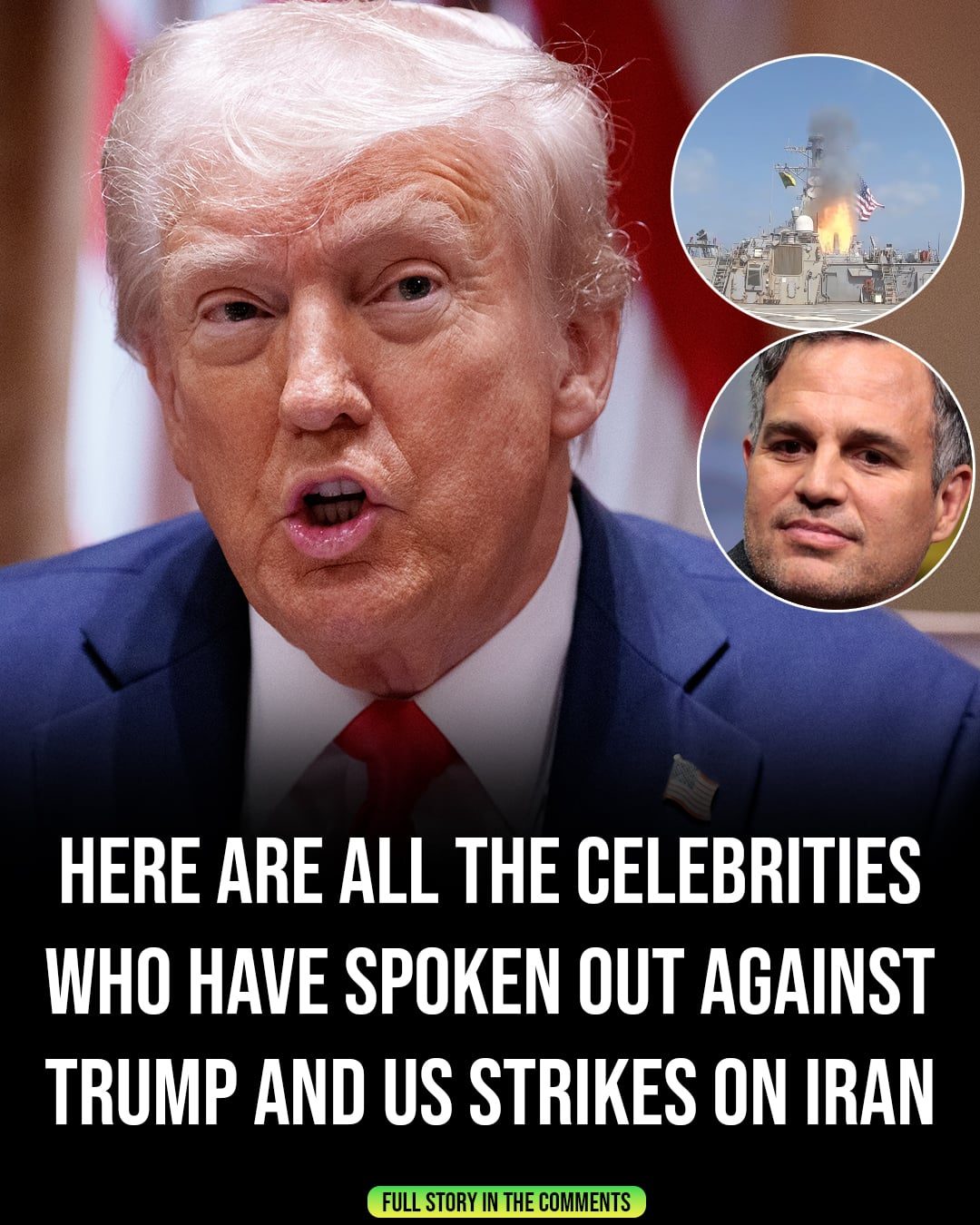
When the United States launched military strikes on Iran — part of a broader campaign that followed mounting tensions and strategic confrontations — reactions came swiftly from across the political spectrum. While many political leaders weighed in with formal statements, entertainers, musicians, late‑night hosts, and public personalities also voiced strong opinions, with a significant number openly criticizing Trump’s approach to what they described as unnecessary escalation or political maneuvering.
Many of these reactions combined moral concerns, political critique, and broader commentary on war, leadership, and national priorities, reflecting wider public debates about the cost, legality, and justification of the military actions.
Musicians and Artists Raising Alarm
One of the most prominent voices from the music world was Jack White, the frontman of The White Stripes. White took to social media to lambast Trump’s record on foreign conflict, sarcastically mocking the president’s self‑portrayal and the incongruity of launching military action while once claiming to be a pro‑peace candidate. White’s remarks underscored what he viewed as a betrayal of past rhetoric and a troubling normalization of war rhetoric.
Similarly, Rosie O’Donnell, actress and media personality known for her outspoken political positions, weighed in with pointed criticism. O’Donnell drew attention to past Trump campaign promises that emphasized avoiding new wars, contrasting them with the unfolding conflict and highlighting a perceived disconnect between past commitments and present actions.
Pop star Kesha also entered the conversation — not only criticizing the administration’s military actions but specifically pushing back against the use of her music in official content related to the conflict. In an Instagram post, she described the repurposing of her song in association with war imagery as “disgusting and inhumane,” emphasizing her belief in peace and rejecting the use of her art to bolster militaristic narratives. She also drew attention to Donald Trump’s controversial name associations in other public files, reflecting how entertainment figures link broader political controversies with foreign policy decisions.
Actors and Writers as Critics
Beyond music, actors and writers — both seasoned performers and cultural commentators — were vocal in their opposition:
-
John Cusack, a long‑time political commentator as well as an actor, used online platforms to argue that Trump’s military escalation was a classic example of a “wag‑the‑dog war,” suggesting it was used as a political distraction rather than a necessary defense move. Cusack framed the conflict as serving external allies’ interests rather than those of the United States.
-
Mark Ruffalo, known for both his acting career and his political activism, shared critical commentary on the motives behind U.S. negotiations and involvement. Ruffalo’s posts implied that key figures within the administration had strategic reasons pushing the nation into war, rather than pursuing genuine diplomatic progress.
-
Kathy Griffin, another outspoken industry figure, echoed similar frustrations with the war narrative, suggesting that what was presented as a defensive measure could be politically motivated. Her social media commentary directly questioned the timing and intent behind Trump’s decisions.
-
Stephen King, the bestselling author known for his engagement with political issues, criticized the war on constitutional grounds. King reminded followers that only Congress has the constitutional authority to declare war, framing Trump’s actions as overreach and directly calling for accountability.
Late‑Night Hosts and Cultural Commentators
Television personalities and late‑night talk show hosts also used their platforms to push back against the narrative of the conflict:
-
Jimmy Kimmel ran segments heavily critical of Trump’s military decisions, invoking the president’s own past statements about foreign policy and urging viewers to question the motives and strategy behind the conflict. Kimmel’s comedic framing was sharp and direct, dubbing Trump’s predictions and current actions with sardonic humor.
-
Jon Stewart, a veteran media critic and former host of The Daily Show, weighed in with pointed commentary on the apparent lack of clarity behind the military strategy. He described the situation as a war “with no clear purpose and no end in sight,” underscoring public frustration with what Stewart saw as chaotic leadership and poor communication. His critique reflected broader concerns about how the conflict began and where it might lead.
Other late‑night hosts, including Seth Meyers and Stephen Colbert, also voiced skepticism in televised segments, highlighting perceived contradictions in official explanations and questioning the coherence of the administration’s war messaging. Their commentary blended humor with sharp political analysis, reinforcing criticism from across the entertainment world.
Broader Celebrity and Media Commentary
In addition to individual entertainers, the backlash included collective reactions from Hollywood circles and broader media responses. Reports noted that several stars accused Trump of breaking campaign promises to avoid foreign wars, with activism notable among those who have previously spoken out on political issues. Critics within these circles argued that the military escalation contradicted earlier commitments and risked dragging the nation into prolonged conflict.
Commentators also highlighted celebrity reactions from both ends of the political spectrum — not just those opposed to the war but also figures defending it or interpreting it differently — though the focus here is on those opposed or deeply skeptical of Trump’s military approach.
Themes in Celebrity Opposition
Across these reactions, several themes emerged among celebrities opposed to Trump’s Iran war:
1. Broken Promises and Contradictions
Many pointed out that Trump had previously positioned himself as an opponent of foreign wars, which made the sudden escalation seem contradictory to his own rhetoric.
2. Political Motivations Over Strategic Clarity
Actors like John Cusack and others suggested that the timing and framing of the conflict may reflect domestic political goals or influence from external allies, rather than purely defensive military strategy.
3. Legal and Constitutional Concerns
Figures such as Stephen King raised legal questions, reminding the public that constitutional authority to declare war rests with Congress — highlighting concerns about unilateral executive action.
4. Artistic Integrity and Ethical Messaging
Artists like Kesha focused on how their work was used in relation to the conflict, rejecting any association between their art and messages that could be interpreted as supporting war.
5. Humor and Critique as Public Discourse
Late‑night hosts used satire and commentary not just to entertain but to engage viewers in political critique, signaling broader cultural frustration with leadership and messaging.
Conclusion: Cultural Influence Amid Conflict
The wave of celebrity opposition to Trump’s actions in Iran illustrates how public figures can shape and reflect broader societal debates — particularly when it comes to matters of war, national identity, and leadership accountability. While not a substitute for formal policymaking or diplomatic dialogue, celebrity voices often amplify public sentiment and influence discourse in ways political speeches sometimes cannot.
These reactions — spanning musicians, actors, authors, and media personalities — collectively highlight a deep unease with military escalation, contradictions with past promises, and concerns over the direction and justification of U.S. foreign policy in the current crisis.
If you’d like, I can also provide a list of additional public figures, pundits, or global voices criticizing the conflict, including international perspectives beyond Hollywood. Just let me know.