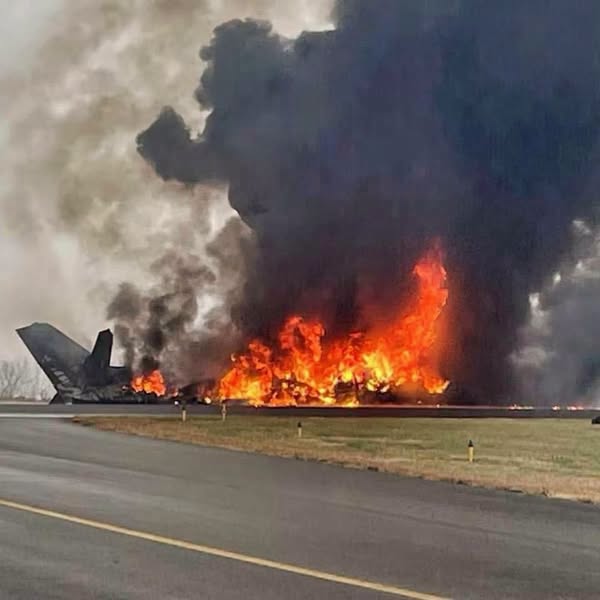
RIGHT NOW: Plane With More Than 244 Onboard Just Crashed… What We Actually Know
A frightening headline has been spreading across social media:
“RIGHT NOW, PLANE WITH MORE THAN 244 ONBOARD JUST CRASH… See more.”
For anyone scrolling through Facebook, the wording immediately creates panic.
A passenger plane.
More than 244 people aboard.
A crash.
And the words “RIGHT NOW” make it sound as though emergency crews are currently rushing toward a brand-new aviation disaster.
But there is an important detail that readers need to know before sharing the post.
The headline appears to be a recycled viral story connected to the tragic Air India Flight AI171 crash of June 12, 2025, rather than confirmation of a new crash happening today. Multiple websites have republished essentially the same headline in 2026, sometimes without clearly explaining that the underlying tragedy is from 2025.
That distinction matters.
The Tragedy Behind the Headline
Air India Flight AI171 was a Boeing 787-8 Dreamliner traveling from Ahmedabad, India, to London Gatwick Airport.
On June 12, 2025, the aircraft crashed shortly after takeoff from Ahmedabad.
The aircraft had 244 people aboard, including passengers and crew, according to reports about the disaster. The crash occurred in a populated area, making the tragedy even more devastating because people on the ground were also affected.
The incident quickly became one of the world’s most closely watched aviation disasters.
Images and videos from the scene spread internationally.
Thick smoke rose above the area.
Emergency crews rushed toward the wreckage.
Families desperately searched for information about their loved ones.
And investigators began the difficult process of determining exactly what had happened.
Why the “RIGHT NOW” Wording Is Misleading
The biggest problem with the viral headline isn’t necessarily the number of people mentioned.
It’s the suggestion that the event is happening right now.
A headline originally associated with a tragedy from 2025 can be reposted months later with the same wording.
When someone sees it in their social-media feed in September 2026, they may naturally assume the event happened today.
That can create unnecessary fear.
A reader might immediately contact friends or relatives.
Travelers may become worried about flying.
Others may share the post with thousands of people before checking whether the story is current.
This is why dates are so important when reading breaking-news claims online.
The Air India Crash Shocked the World
The crash of AI171 attracted enormous international attention because of the aircraft involved and the circumstances surrounding the accident.
The Boeing 787-8 Dreamliner is a modern wide-body aircraft used for long-distance international flights.
The aircraft had departed Ahmedabad and was headed toward London.
Instead of beginning a routine international journey, the flight ended in catastrophe shortly after takeoff.
The crash generated an enormous emergency response.
Firefighters worked to control the resulting fires.
Police and rescue personnel secured the area.
Medical teams treated injured people.
Investigators began documenting the wreckage and collecting evidence.
Meanwhile, families waited for confirmed information about their loved ones.
One Survivor Became a Symbol of Hope
One of the most extraordinary elements of the tragedy was the reported survival of one passenger.
Vishwashkumar Ramesh survived the crash and was taken for medical treatment.
His survival attracted worldwide attention because of the enormous destruction surrounding the aircraft.
His story became one of the few moments of hope associated with a tragedy that caused such extensive loss of life.
For the families who lost loved ones, however, the story was far more painful than a statistic or headline.
Every passenger represented an individual person.
Someone’s parent.
Someone’s child.
Someone’s brother or sister.
Someone’s friend.
Someone’s colleague.
Behind the passenger count were hundreds of personal stories.
Investigators Had to Ask Difficult Questions
Whenever a commercial aircraft crashes, investigators must determine what went wrong.
That process can be extremely complicated.
Investigators examine aircraft systems, engines, flight controls, maintenance records, weather conditions, crew actions, cockpit communications, flight-data recordings, and other evidence.
They may also interview witnesses and analyze video recordings.
Importantly, investigators do not normally determine a crash’s cause simply by looking at dramatic footage.
An aircraft can appear to behave strangely in a video while the actual technical explanation remains unknown.
That is why aviation investigations can take considerable time.
Don’t Trust Every Crash Video
One of the biggest problems with viral aviation stories is the use of dramatic images without proper context.
A photograph showing an aircraft on fire does not automatically prove when or where the photograph was taken.
A video of a plane crashing might come from an accident years earlier.
A dramatic image may even come from a training exercise, movie, simulation, or unrelated incident.
Once the original description is removed, the same image can be attached to an entirely different story.
This is especially common when posts use phrases such as:
“BREAKING.”
“JUST NOW.”
“RIGHT NOW.”
“SEE MORE.”
Those words are designed to create urgency.
But urgency should never replace verification.
What Current Aviation Information Shows
The FAA maintains a public page listing aviation accidents and incidents.
Its current entries include several general-aviation accidents and some commercial aviation incidents, but the page does not list a new commercial-airliner crash matching the viral claim of a plane with more than 244 people aboard.
That is an important reason not to describe the viral headline as a newly confirmed disaster.
When a major commercial aircraft crashes, official aviation authorities, the airline, emergency services, and major news organizations typically become important sources for confirmation.
A viral Facebook post alone is not enough.
Why These Stories Keep Returning
Old disasters are sometimes repackaged because they continue to attract attention.
A tragic aviation accident contains all the ingredients of a highly clickable story:
fear,
mystery,
large numbers,
dramatic photographs,
and human emotion.
A publisher can take an old story and give it a new-looking headline.
If the original date isn’t obvious, readers may believe the event has just happened.
Then the post gets shared.
Another page copies it.
Another account reposts the video.
Eventually, thousands of people may encounter the same claim without realizing that everyone is repeating the same original material.
That creates an illusion of confirmation.
But repetition is not independent verification.
Remembering the Victims With Respect
The Air India tragedy should not simply be treated as viral content.
It involved real people and devastated families.
When aviation disasters are transformed into sensational headlines, it is easy to forget the human beings behind the numbers.
For families, the crash wasn’t an exciting “breaking story.”
It was a moment that permanently changed their lives.
That is why responsible reporting matters.
Even when a story is being shared for entertainment or engagement, the subject may involve people who are grieving.
The Lesson for Social Media
The next time you see:
“RIGHT NOW: PLANE WITH MORE THAN 244 ONBOARD JUST CRASH…”
don’t immediately press the share button.
First, check the date.
Then look for the original source.
Check whether an airline has released a statement.
Look for information from aviation authorities.
Compare reports from independent reputable news organizations.
And examine whether the photographs or videos actually belong to the claimed event.
Those few extra seconds can prevent an old tragedy from being mistaken for a new disaster.
The Bottom Line
The viral headline about a plane carrying more than 244 people does not currently establish that a new crash has happened today.
The wording has been repeatedly circulated online and is connected to the devastating Air India Flight AI171 crash of June 12, 2025.
That tragedy deserves to be remembered accurately and respectfully.
But an old aviation disaster should not be presented as a new emergency simply because a social-media post says “RIGHT NOW.”
In the age of instant information, the fastest story is not always the newest story—and the loudest headline is not always the most accurate one.
Before you share a frightening breaking-news claim, stop for a moment. Check the date. Check the source. Check the facts.
Because when the story involves hundreds of human lives, accuracy matters far more than clicks.