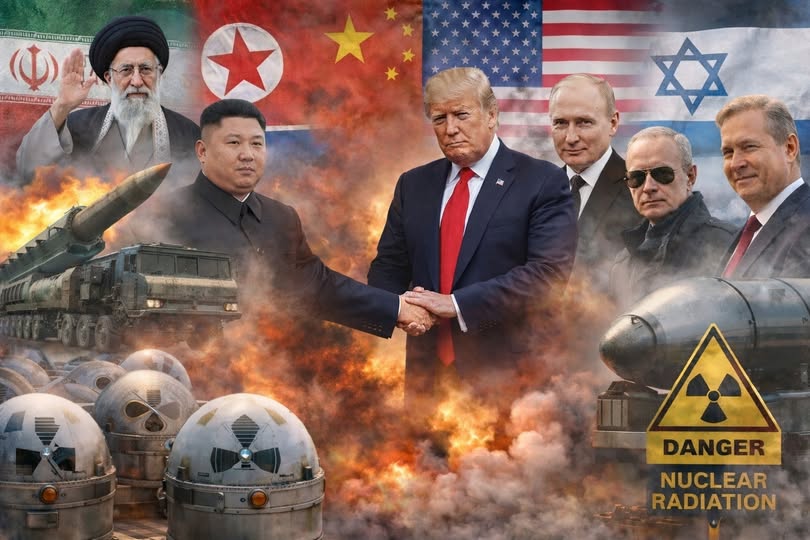
“BREAKING NEWS… 6 countries join forces to attack…”—phrases like this are designed to trigger urgency, fear, and curiosity all at once. They spread quickly across social media, often without context, verification, or credible sourcing. Before diving into what such a headline might mean, it’s important to pause and recognize a key reality: truly major global military actions involving multiple countries do not remain vague or hidden behind “see more” posts. They are reported clearly and immediately by major news organizations and official government channels.
When nations coordinate militarily, especially in a coalition of six countries, it represents a significant geopolitical development. Historically, such coalitions have formed during major conflicts or international interventions. For example, during the Gulf War, a large coalition of countries worked together under a unified command structure to respond to Iraq’s invasion of Kuwait. Similarly, operations connected to the War in Afghanistan involved multiple nations coordinating strategy, logistics, and military force.
However, the key difference between those real events and viral “breaking news” posts is transparency. Governments issue statements, defense departments hold briefings, and global organizations like the United Nations or alliances such as NATO often provide context or involvement. If six countries had suddenly launched a coordinated attack, there would be immediate, detailed coverage across every major news platform in the world.
So what’s actually happening when you see a headline like this?
In many cases, these posts are intentionally incomplete. The phrase “see more” is often used to draw clicks, encourage shares, or lead readers to low-quality or misleading content. The lack of specifics—no countries named, no location identified, no timeline given—is a major red flag. Real news prioritizes clarity: who, what, where, when, and why. When those elements are missing, skepticism is not only reasonable—it’s necessary.
That doesn’t mean global tensions don’t exist. In fact, the world is always navigating complex relationships between nations. Military alliances, joint exercises, and strategic partnerships happen regularly. Countries may conduct joint drills, coordinate defense strategies, or respond collectively to perceived threats. But these actions are usually communicated in advance or explained afterward to avoid misunderstanding or escalation.
Another possibility is that such a headline is exaggerating a smaller event. For example, a joint military exercise involving several countries could be framed in a misleading way to sound like an active attack. Military drills happen frequently around the world and often involve multiple nations working together to improve coordination and readiness. Without context, however, these exercises can be misrepresented as something far more alarming.
It’s also worth considering the role of misinformation in today’s digital environment. Social media platforms allow information to spread faster than ever before, but speed often comes at the cost of accuracy. Sensational headlines are more likely to be shared, especially when they provoke strong emotional reactions. Fear, in particular, is a powerful motivator for engagement.
This is why verifying information is so important. When encountering a claim about a major international event, the best approach is to check reliable sources. Established news organizations, official government statements, and verified international bodies provide information that has been reviewed and confirmed. If those sources are silent on a supposed “breaking” event, that silence is meaningful.
There’s also a psychological aspect to these kinds of headlines. They tap into existing anxieties about global conflict and uncertainty. In a world where geopolitical tensions are often discussed, a vague but alarming statement can feel believable, even without evidence. Recognizing this emotional trigger can help in approaching such claims more critically.
If we imagine, hypothetically, that six countries were to join forces in a military action, the implications would be enormous. It would likely involve complex diplomacy, strategic planning, and significant global consequences. Markets could react, international travel might be affected, and political leaders around the world would respond publicly. None of this would happen quietly or ambiguously.
Instead, what we’re seeing with headlines like this is often a reflection of how information is packaged for attention rather than accuracy. The goal is not necessarily to inform, but to capture interest and drive engagement. That doesn’t make the content reliable—it makes it effective at spreading.
In moments like this, staying grounded in verified information is the best approach. Rather than reacting immediately to a dramatic claim, taking a few extra seconds to question it can make a significant difference. Ask: Are specific details provided? Are credible sources mentioned? Is this being reported widely by trusted outlets?
Ultimately, the phrase “BREAKING NEWS… 6 countries join forces to attack…” tells us very little on its own. Without context, it’s not a confirmed event—it’s a prompt designed to make you click, react, and share. And in today’s information landscape, understanding that distinction is more important than ever.
If you want, you can share the full post or details you saw, and I can help break down whether it’s real, misleading, or completely false.