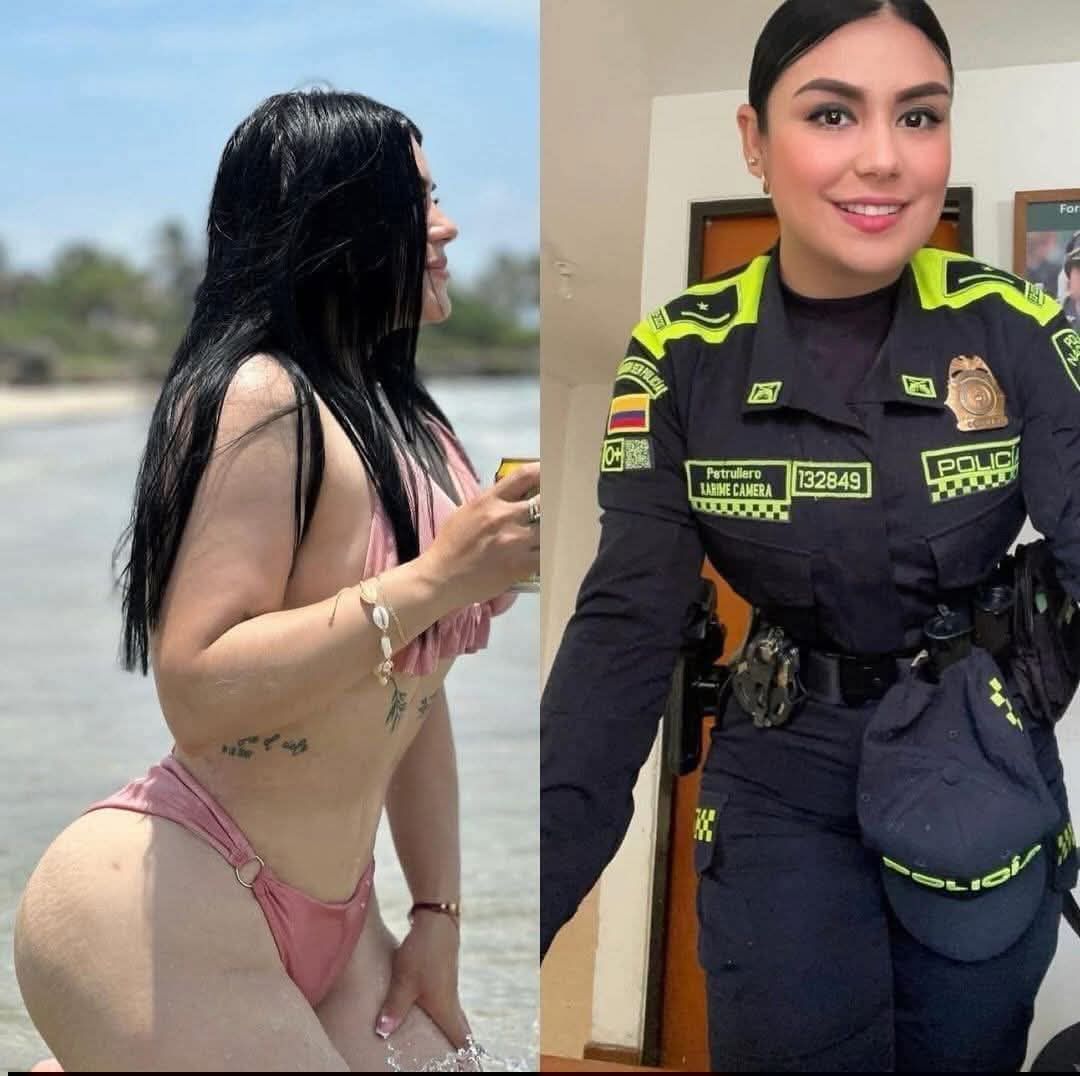
After her shift, this police officer dedicates herself to a second calling—one that never makes the incident log, never earns overtime, and rarely draws applause. When the patrol car is parked, the uniform folded, and the radio finally quiet, her day is far from over. For her, the end of a shift is not a finish line but a handoff—from enforcing the law to serving the people behind it.
She begins where most people don’t look. The streets after dark are different when you’re off the clock. The urgency is gone, replaced by listening. She walks familiar blocks not to scan for threats, but to notice who’s missing. The elderly man who hasn’t opened his shop in days. The woman who sleeps by the bus stop when the shelter fills. The teenager lingering too long, unsure where to go. She knows their names, their stories, the soft details that never make it into a report.
Some nights, she brings food—hot meals packed carefully so they won’t spill, sandwiches wrapped tight, water bottles tucked in beside socks and gloves. Other nights, she brings time. She sits on cold concrete and listens while someone unburdens years of grief in a single breath. She hears about lost jobs, broken families, medical bills that multiplied overnight. She doesn’t interrupt. She doesn’t rush. She understands that dignity often starts with being heard.
Her commitment grew quietly. Early in her career, she answered a routine call that changed her. A family was on the brink—no heat, empty cupboards, a mother trying to hold it together for her kids. The call ended, the paperwork filed, and the system moved on. But she couldn’t. She returned on her own time with groceries, then came back again with coats. When she saw the relief in their eyes, she realized something powerful: the badge gave her authority, but compassion gave her reach.
Since then, she has built a rhythm. On her days off, she organizes donations—collecting winter jackets in November, school supplies in August, hygiene kits year-round. She coordinates quietly with local volunteers, never asking for recognition. She’s careful not to blur professional lines, but she knows that rules and humanity can coexist. If the system has gaps, she believes someone should step into them.
What surprises people most is how ordinary she insists her actions are. “Anyone would do this,” she says, though experience suggests otherwise. It takes stamina to give after a long shift of calls that drain you. It takes humility to help without documenting it. It takes courage to stay soft in a job that can harden you if you let it.
Her coworkers notice the change she brings back to the station. She’s calmer, more patient, better at de-escalation. She understands that behavior is often the surface ripple of deeper pain. When tensions rise, she remembers faces from the street and chooses words that lower the temperature. Her approach doesn’t make headlines, but it makes encounters safer—for everyone.
There are moments of heartbreak. People she helps sometimes disappear, pulled under by addiction or circumstance. Not every effort leads to a visible win. But she measures success differently now. A warm night. A clean start. A conversation that shifts someone’s next choice just a degree in a better direction. She knows change is cumulative, built from small mercies stacked over time.
The community has started to feel it. Trust grows in places where it once withered. People who used to cross the street now stop to say hello. Tips come in not out of fear, but out of respect. Parents tell their kids that police can be helpers too. It’s not naive; it’s earned.
She guards her privacy fiercely. No viral videos, no interviews. The work matters more than the story. Still, the impact spreads. A volunteer inspired by her example organizes a clothing drive. A local business donates meals. A neighbor opens their garage for storage. Goodness, she’s learned, is contagious when it’s quiet and consistent.
At the end of the night, she returns home exhausted but grounded. She washes the day off her hands, sets her boots by the door, and prepares for tomorrow’s shift. The badge will come back on. The radio will crackle again. She will do her job with professionalism and resolve. And when the shift ends, she’ll keep going—because service, to her, was never meant to clock out.
In a world that often reduces policing to headlines and statistics, her story is a reminder of something older and truer: that safety is built not only by laws enforced, but by lives uplifted. After her shift, this police officer dedicates herself to people—and in doing so, proves that the strongest force in any community is care, given freely, after hours.