My father married my aunt a year after my mother died. Even writing that sentence still feels unreal, like I’m describing the plot of a melodrama rather than my own life. Grief has a way of warping time and logic, but nothing prepared me for how quickly mourning turned into whispers, tension, and a wedding invitation none of us knew how to accept.
My mother had been the quiet center of our family. Not loud, not dramatic—just steady. When she died, suddenly and without warning, our house became hollow. My father wandered through the rooms like a man who had misplaced himself. My brother and I tried to help in the ways adult children do: phone calls, errands, awkward dinners filled with forced normalcy. And then my aunt
stepped in.
She was my mother’s younger sister. Always present at holidays, always helpful, always just a little too familiar with the rhythms of our household. After the funeral, she stayed longer than expected. She cooked. She cleaned. She reminded my father to eat. At first, it felt like kindness—necessary, even. We told ourselves that family shows up in grief.
But grief blurs boundaries.
By the time my father told us he was “seeing someone,” I already knew. The confirmation landed with a dull thud rather than shock. Still, knowing something and hearing it spoken aloud are very different things. He said it gently, as if tone alone could soften the truth. He said he hadn’t planned it, that loneliness does strange things to people, that no one could ever replace my mother. All the right words, delivered in the wrong order.
The engagement came three months later.
My brother reacted differently than I did. Where I retreated inward, trying to rationalize the situation, he grew sharper, more observant. He asked questions my father brushed aside. How long had they really been close? When did it start? Why now? My father responded with practiced calm, insisting there were no secrets, that grief had simply brought two broken people together.
I wanted to believe him. I needed to believe him. The alternative—that something had been quietly wrong long before my mother’s death—was too heavy to carry.
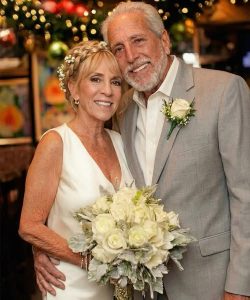
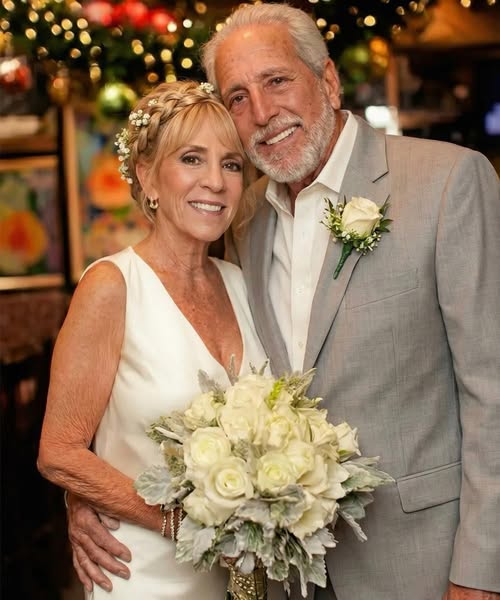
The wedding was small. Intimate, my father called it. Family only. The setting was understated, almost apologetic, as if minimalism could absolve discomfort. I remember watching my aunt—now stepmother—adjust her veil with hands that did not tremble. She looked composed, resolute. Not guilty. Not nervous. Certain.
That certainty unsettled me.
The ceremony proceeded with strained politeness. No one cried. No one laughed too loudly. It felt less like a celebration and more like a performance everyone had agreed to endure for the sake of peace. And then came the moment that fractured everything.
During the reception, after the speeches had begun, my brother stood up unannounced.
At first, I thought he was going to offer a reluctant toast—something stiff but safe. Instead, his voice cut through the room with unsettling clarity.
“Dad isn’t who he pretends to be.”
Silence fell instantly, thick and absolute.
My father froze. My aunt’s smile vanished. I felt the blood drain from my face as every head turned toward my brother, then back to my father. This was not grief talking. This was not drunken impulsivity. My brother had always been careful with words. When he spoke, it meant something.
He didn’t raise his voice. He didn’t accuse. He stated.
He talked about emails he’d found while helping our mother organize old files before she died. Messages that predated the illness. Messages that crossed lines long before grief could be blamed. Emotional intimacy disguised as concern. Plans discussed in hypotheticals that now felt chillingly concrete. “If anything ever happened.” “We’d take care of each other.” “No one would understand.”
The room shifted from discomfort to horror.
My father tried to interrupt, but my brother kept going. He spoke about how our mother had sensed something was wrong but never confronted it—how she’d confided in him once, uncertain, afraid of being paranoid. How she’d chosen silence over conflict. How that silence had been rewarded.
When my brother finished, no one applauded. No one spoke. My aunt stared straight ahead, jaw clenched, exposed not by rage but by recognition. My father looked smaller than I had ever seen him. Not angry. Not defensive. Just revealed.
The wedding did not end dramatically. No one stormed out. That was the strangest part. People left quietly, as if noise might make the truth harder to ignore. I hugged my brother outside, my hands shaking. He didn’t look relieved. He looked tired.
Later, my father called me. He said it wasn’t what it sounded like. That nothing physical had happened until after. That intentions didn’t equal actions. I realized then how little those distinctions mattered. Betrayal isn’t always about bodies—it’s about loyalty, about choosing honesty when it’s inconvenient.
I don’t speak to my father much anymore. Not because of who he married, but because of who he chose to be while pretending to be someone else. My aunt—my stepmother—exists now in a category I don’t have language for. She is family by law, and a stranger by truth.
My brother and I talk often. About our mother. About the way secrets don’t stay buried—they just wait for a moment to speak. He didn’t ruin the wedding. He ended the lie.
And sometimes, when grief loosens its grip, I feel grateful. Not for the pain, but for the clarity. Because love built on silence isn’t love at all. And pretending costs far more than honesty ever could.